Documenting Progress and Reflections in the Garden
My attempt to document the planting, growth, harvesting, and preserving of our family’s 8000 square feet of garden.
Northeast Iowa Gardening in growing zone 4
Last frost date May15, First frost date September 15
May 3rd-9th, Week 6
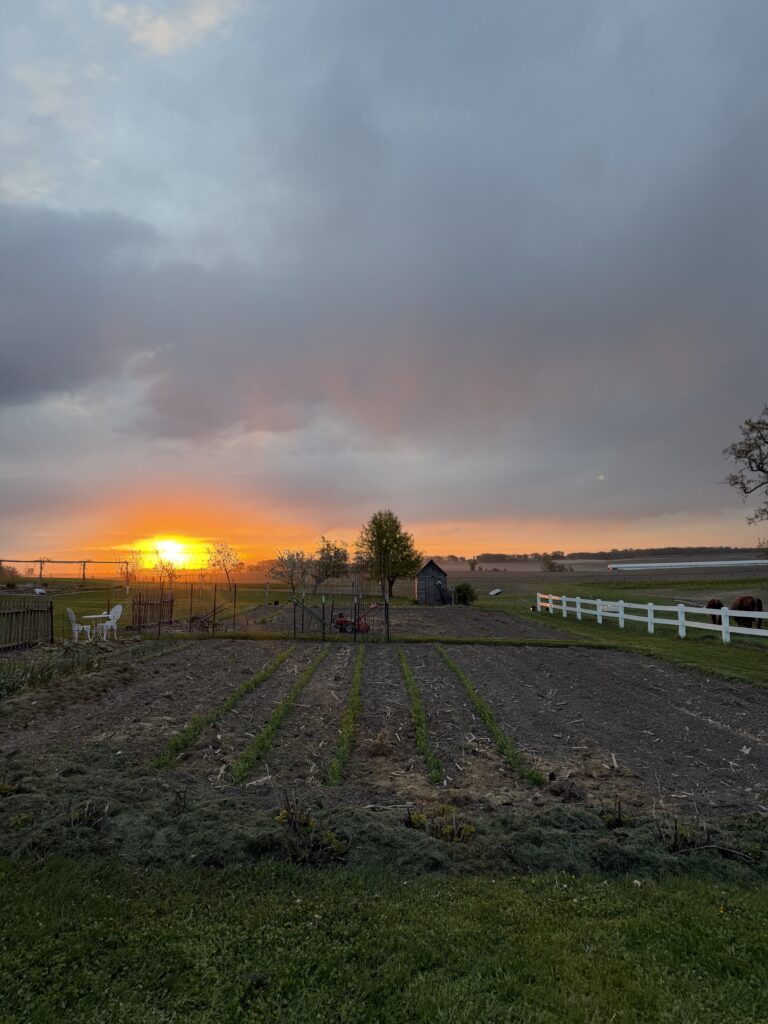
More frost advisories this week, and daytime temperatures that never hit 60°F was what kept this gardener from getting too excited. Because even though the soil was dry enough to garden it wasn’t warm enough to encourage me to plant my summer crops.
Let’s talk about soil temperatures and how they affect crops.
The whole reason we have divided most garden crops into 2 well known categories, (spring and summer crops or cold crops and summer crops) is because of their preferred soil temperatures. For example, peas will germinate and thrive in soil temperatures of 40-60°F, while tomatoes will not thrive in soil temperature below 60°F.
This also means that cold crops can handle getting a little frost or even snow on their foliage and still survive and even thrive. While tomatoes, peppers and other summer crops will give up and die if frost touches their foliage.
With a growing season of approximately 120 days, most gardeners in our area are anxious to get their tomatoes in the garden! But it is wise to be aware of soil temperatures and varieties of tomatoes planted. You may be thinking, that’s plenty of time since tomatoes are in the 75-100 days to maturity range. This doesn’t mean ‘time passing’ or calendar days. Days to maturity means number of hours collected with temperatures between 50 and 86°F. High and low temperatures play a much bigger role than actual time passing.
Here is how to figure out how many GDD (Growing Degree Days) are in one day:
Since optimal growing for most crops happens between 50°F and 86°F that is the range of temperatures we use.
First you need to take the average temperature of your day by adding the low temperature and the high temperature and dividing by 2. Because growing is slowed and nearly halted when temperatures fall below 50°F or go over 86°F. use 50°F as our base low and 86°F as our high whenever temperatures are outside of that range.
For example:
May 10th. Low temperature 55°F + high temperature of 72°F = 127, Divided by 2 = 63.5
Next, we subtract our base temperature which is 50°F. 63.5 minus 50 = 13.5 GDD
May 11th: Low 33° High 67°F (change the 33°F to the base low of 50,) add 67, divide by 2 = 58.5, subtract the base temperature of 50 and we get 8.5 hours of GDD.
May 10th = 13.5 GDD
May 11th =8.5 GDD
So, we can see that in 2 calendar days (48 hours) my garden crops accumulated 22 hours (less than 1 day) of Growing Degree Days.
This is of course the formula for summer crops.This formula could be much more fine-tuned for each group of crops based on the daytime temperatures that they prefer.
I imagine the base temperature for brassica would be 40°F and the high temp would be 75°F.Using this formula would mean GGD (Growing Degree Days) add up faster during cool weather. But since the only formula is for Corn, soybeans and other big ag summer crops, it fits our summer loving crops better. But if you are like me, simply being aware of how GDD are added up and which crops love cool soil, and which ones love warmer soil and temperatures helps me adjust my expectations.Understanding GDD will also help you choose the varieties that reflect the length of your growing season.
For example. The Brandywine variety of tomato needs 100 days to maturity and now that we understand that means GDD and not actual calendar days We know that to get a harvest from this variety in our region we will need to have warmer than average temperatures for most of the growing season.
Tasks I worked on:
Decided what kind of trellis to put on the peas and made sure we have all the supplies.
Prepared the rest of the garden for summer crops, by shallow tilling and removing weeds and last year’s vines and stalks.
Cleaned up the gardens and perennials around the house to prepare for planting some annual flowers.
What we are harvesting and eating from the garden:
Rhubarb
Chives
A few radishes
New things that are Sprouted or rooted:
Carrots and red beets have sprouted beautifully. Never watered them even though we have had no rain in 10 days, or since I planted them.There is enough moisture in our soil to saturate and sprout most seeds enough for sprouting without ever watering. Especially carrot seeds which are so delicate and only get covered with a sprinkling of soil. A little bit of morning dew is plenty of moisture for carrots seeds. Watering seeds, especially delicate seeds like carrots can over saturate the soil and cause lack of oxygen and lack of oxygen can cause seeds to rot. Watering can also cause the soil to form a crust that delicate seeds cannot penetrate with their fragile little sprouts.
As with every week and most gardeners, many things were left undone or half finished, but I have learned that is the nature of the growing season.
Reflections
The cold weather and slow garden growth this week made me think about relationships. Just as plants thrive best when temperatures stay between 50°F and 86°F, our relationships also flourish in a warm environment filled with grace, love, and encouragement. While I can’t control the weather for my garden, I do have the power to shape the warmth and atmosphere in my home.
A ‘cold’ home could look like many rules and expectations with strict consequences for broken rules.
A ‘hot’ home could look like few expectations and boundaries with members living only to please themselves.
A home with the optimal temperature for growing humans and relationships is a balanced home.boundaries are put in place and grace is given as often as possible, rules are put into place members are encouraged to respect the rules by their own choosing rather than by threat of consequence.The optimal temperature for growing relationships is going to vary depending on the nature and personality of each family and the ages or stages of the family members. But regardless of the stage we are in, I firmly believe that family prayer and devotion time is what brings the ‘temperature’ of a home into the optimal growing range!
Ruth Ann you are o right. I grew up in a balanced home. But my marriage has been a mixture of ht and cold. I’ve always tried to create a balanced home fr my kids but my husband came frm a very different up bringing than me. I come from farms and he and his family lived on a farm and his Momma worked fr the farmers. They were treated bad. My family hhad and my cousin still has my Grandparents Dairy Farm. I has a wonderful child hood and tried very hard to gice my kids and grandkids a good up bringing but have had to fight all the way. I thank God every day fr everything and everyone in my life. Thank you fr your post , video and everything thing you do. You have helped me through some tough times and remided me f my up bringing. Ilove watching you and you family grow. Have a bless and wonderful weekend
Thank you Ruth for such good information. I love how you relate a family home with the garden. Family devotions are such good nutrition for our family’s. God bless you and your family





7 Responses
Thanks Ruthann for teaching me about growing degree days. New to me!
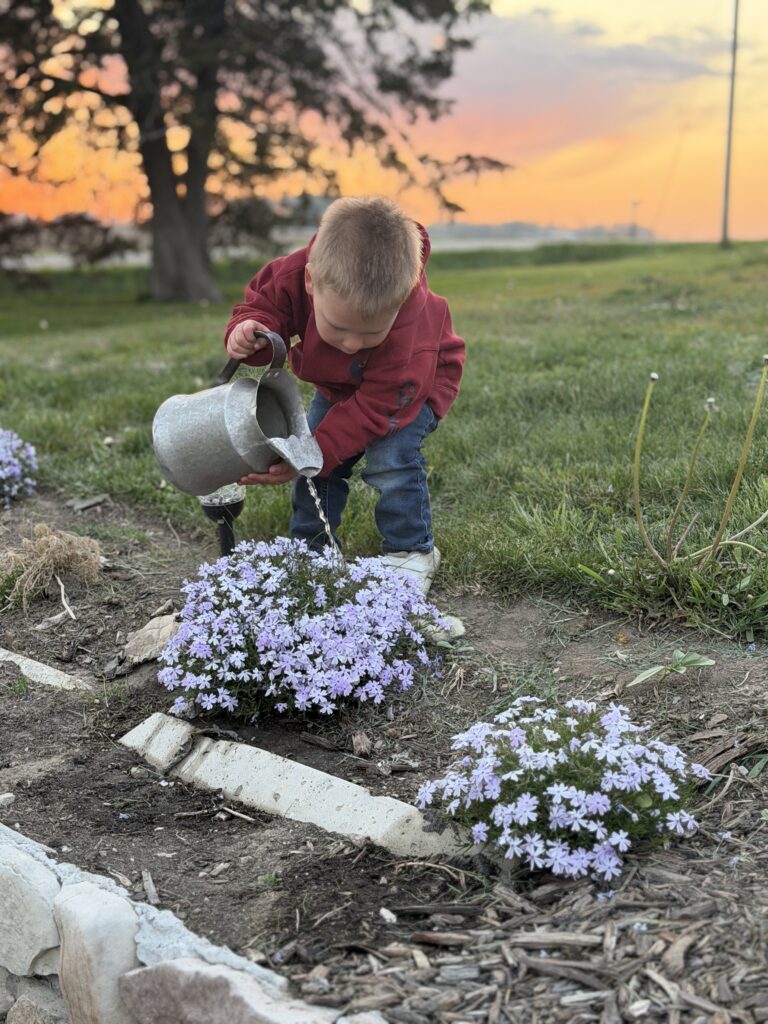
Well said, Ruthann. I learned something new! GDD calculated. I never knew. Love the picture of your oldest grandson.
Your wisdom is so beautiful.
Thank you for this explanation of growing degree days and for the application to our lives. Your writing is a blessing!
Thank you for this explanation of growing degree days and for the application to our lives. Your writing is a blessing!
Ruth Ann you are o right. I grew up in a balanced home. But my marriage has been a mixture of ht and cold. I’ve always tried to create a balanced home fr my kids but my husband came frm a very different up bringing than me. I come from farms and he and his family lived on a farm and his Momma worked fr the farmers. They were treated bad. My family hhad and my cousin still has my Grandparents Dairy Farm. I has a wonderful child hood and tried very hard to gice my kids and grandkids a good up bringing but have had to fight all the way. I thank God every day fr everything and everyone in my life. Thank you fr your post , video and everything thing you do. You have helped me through some tough times and remided me f my up bringing. Ilove watching you and you family grow. Have a bless and wonderful weekend
Thank you Ruth for such good information. I love how you relate a family home with the garden. Family devotions are such good nutrition for our family’s. God bless you and your family