Beets are a root crop and traditionally stored in root cellars and are an excellent source of winter nutrition. Our Ancestors were growing mountains of root crops every summer and storing them in the root cellars for winter nutrition long before electricity made canning and freezing more popular.
I am inclined to think that these winter stored root crops provided a more nutrient dense winter diet than our frozen, canned, dehydrated and even freeze dried crops provide for us today.
I am therefore on a slow journey to growing more crops that can be stored in their whole form than those that have to be canned or frozen to preserve them. In addition to growing more of these root crops I need to work on includding them in our diet more often. Redbeets are not very high on our list of foods that we want to eat all winter long but I am going to work towards changing that.
To store whole red beets for winter:
Beets require temperatures between 32°F and 40°F with 90 to 95% relative humidity. This prevents them from shriveling or drying out while keeping them in a dormant.
We can mimic a root cellar environment in our modern refrigerators. Many Homesteaders own a second refrigerator to replace the need for a root cellar.
Brush any dirt off of the red beets (harvest on a dry day).
Cut the tops off about 1 inch above the beet, leave the root intact.
Place beets in a Ziplock bag and seal it up.
Place in refrigerator for up to 12 months.
To freeze red beets:
Remove stems, leaving 1” of stem above the beet, keep the root intact.
Scrub the beets clean.
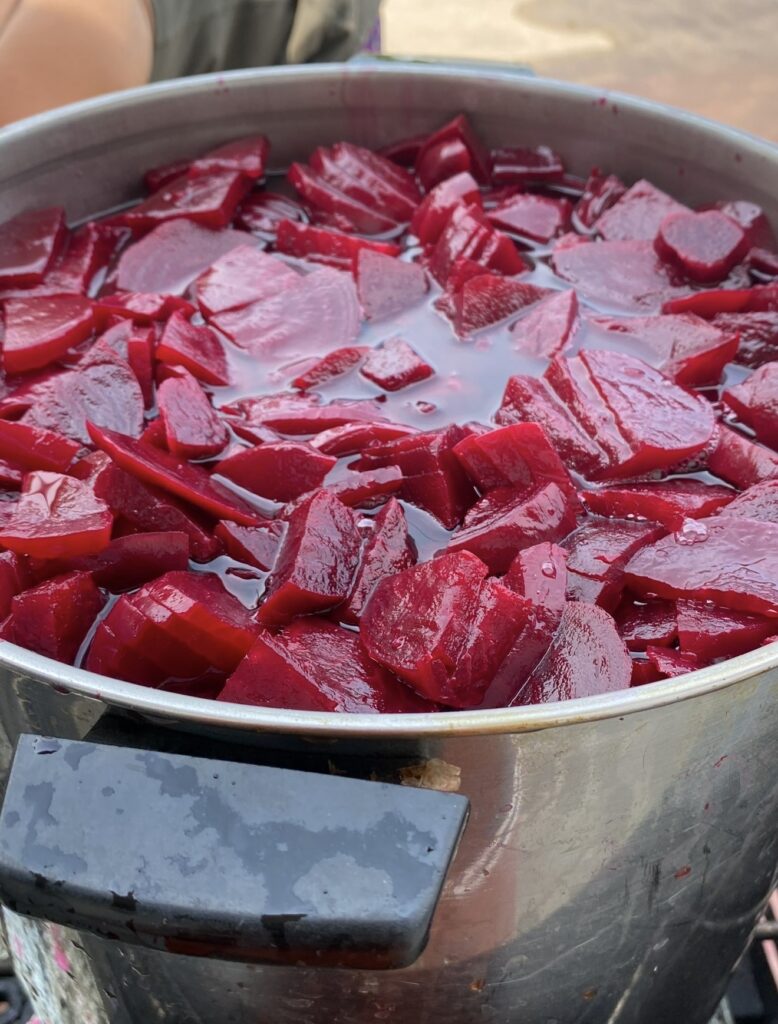
Place clean beets in a pot of water and cook until soft like a potato
Strain beets from the boiling water and immerse into cool water.
Peel the beets by simply rubbing the peels off with your hands.
Dice the beets to your preferred size.
Flash freeze on cookie sheets (or don’t)
Place a meal size portion of diced beets in a Ziplock back or vacuum seal bag and freeze for 8-10 months.
To prepare beets from frozen: thaw, strain, and heat in a baking dish with salt and butter.
To prepare buttered beets from refrigerator storage follow all the above steps but place in a baking dish with salt and butter and heat in the oven until hot instead of freezing them.
Canning pickled beets
Proceed through steps 1-6 as if freezing red beets but save the beet waterfrom cooking your beets.
2 cups beet juice
2 cups white vinegar
2 cups sugar
1 T. salt.
Mix until sugar is dissolved.
Add 6-8 cups (3-4 pounds) of diced beets.
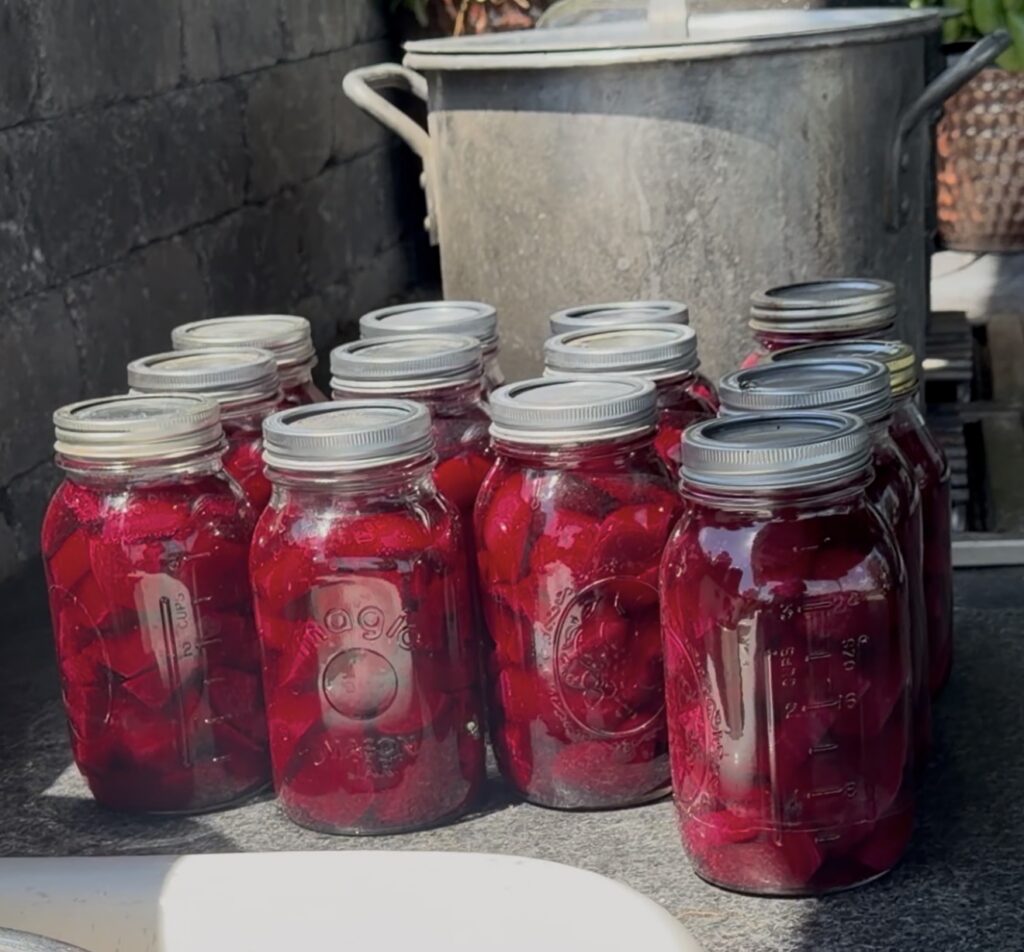
Fill canning jars, pints or quarts with beets and brine. Add lids and rings and water bath can for 10 minutes.
Canning pickled beets
Clean 2-4 medium sized beets but don’t scrub them
Cut into 1–2-inch pieces.
Put your diced beets into a 2-quart jar. (Or two 1-quart jars.)
Mix
1.5 T. non iodized salt into
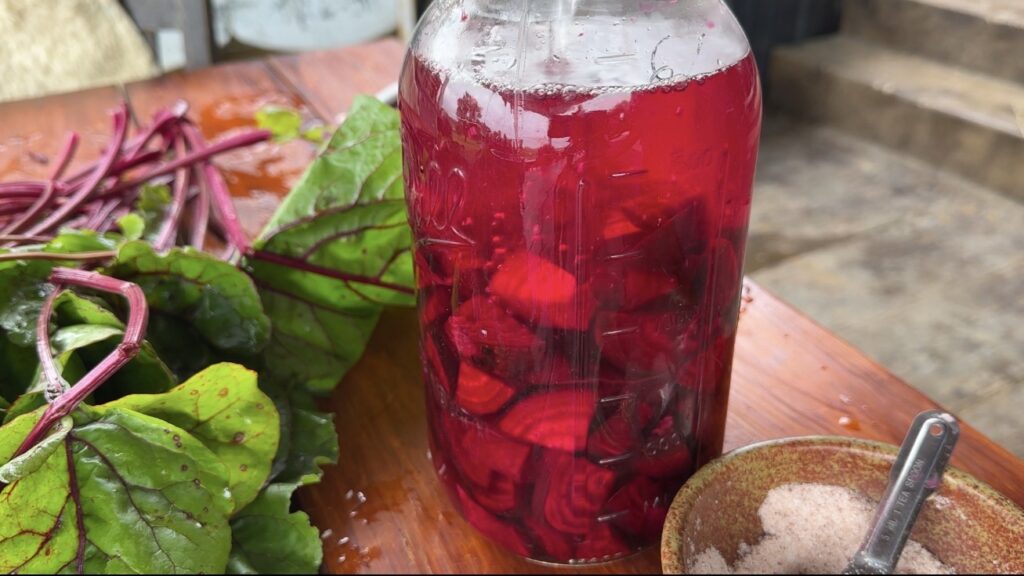
6 cups non-chlorinated water and pour into jar with beets. Cover with a vented fermenting lid, or regular canning lid turned on loosely to allow air to escape.
Ferment on your counter (out of direct light) for 3-7 days. I usually start tasting on day 3. Once the juice has little bubbles rising from the bottom to top and no longer tastes salty it is ready. Strain the beets from the juice. (Eat them or feed them to the chickens. Bottle the juice in clean jars with tight fitting lids and store in refrigerator for up to 3 months.
Beet kvass is rich in minerals and a great digestive aid. It has a tart and earthy flavor, and you should start in slowly. Many people take an ounce or two before each meal for a medicinal purpose rather than drink it by the glass as a beverage. I like to add an ounce or 2 of beet kvass to a glass of sparling water for a refreshing summertime drink.
Your beets look very delicious! A true gift from God! I began adding a few chopped or sliced beets to our green salads and they are wonderful! It is surprising how well beets go with home made salad dressings in our green salads. Yum!
I can grow beets down here in Texas most of the year so we eat a lot fresh but our family enjoys pickled beets all the time. I like to keep a jar in the fridge most of the time along with a jar of 3 ( or 4 or 5) bean salad as well.
I struggle to grow enough cakes to can but I will grow corn to make and process corn relish to keep on the shelf.
Some crops don’t do well with our hot weather. Then there’s the lack of pollinators and abundance of squash vine bore. Sigh.






4 Responses
Your beets look very delicious! A true gift from God! I began adding a few chopped or sliced beets to our green salads and they are wonderful! It is surprising how well beets go with home made salad dressings in our green salads. Yum!
I can grow beets down here in Texas most of the year so we eat a lot fresh but our family enjoys pickled beets all the time. I like to keep a jar in the fridge most of the time along with a jar of 3 ( or 4 or 5) bean salad as well.
I struggle to grow enough cakes to can but I will grow corn to make and process corn relish to keep on the shelf.
Some crops don’t do well with our hot weather. Then there’s the lack of pollinators and abundance of squash vine bore. Sigh.
Thank you for sharing 🩷🩷🩷
Love this! I can’t wait to plant my beets and follow your recipe.