Ingredients
Method
- In a heavy bottom pot warm the cow's milk to 90℉ or goat's milk to 85℉.
- Add the culture. Sprinkle the culture over the warm milk and give it 3-5 minutes to rehydrate. Then stir for one minute using an up and down action to assure that the culture gets to the very bottom of the pot.
- Cover and let the culture acidify the milk for 45 minutes.
- After 45 minutes, dissolve the rennet into the water. Stir the rennet the same way you did for your culture (and calcium chloride if you are using pasteurized milk).
- Cover your pot and let it set for 1 hour or until curds break clean over your finger (see video). If curds are still messy when you break them let them set for another 15 minutes and check again. Keeping your milk at a consistent 90℉ (85℉ for goat's milk) helps curds to set. Use a double boiler or just turn your burner on low for a few minutes at a time.
- Cut your curds in a criss cross pattern. Approximately one inch curds
- Let curds heal by letting them set for 5 minutes and then turn your burner to low and start stirring your curds in layers to break the long slices into 1 inch cubes. See video.
- Over the next 30 minutes bring your curds to 100℉ stirring them gently all the while to keep them from matting on the bottom. Finding the bigger curds and breaking them down to similar sizes. As you stir the curds will release their whey and shrink.
- When you've reached 30 minutes and 100℉, strain your curds through a cheese cloth lined colander. Hang your cheese in a warm place to drain for 1 hour.
- Then put your curds into a dish and crumble them.
- Add the salt.
- Put your curds back into a cheesecloth and put into your mold and press. Put in a warm space again and press with 10lbs pressure for 10 minutes.
- Remove from press, turn the curds (now pressed into a wheel) over, and put them back into the press. Put back into the warm space and this time press with 20lbs pressure for 20 minutes.
- After 20 minutes turn your press to 50lbs pressure for the next 8-12 hours.
- After 8-12 hours remove the cheese from the press and cloth and allow to air dry for a few days until the rind is nice and dry, turning couple times a day.
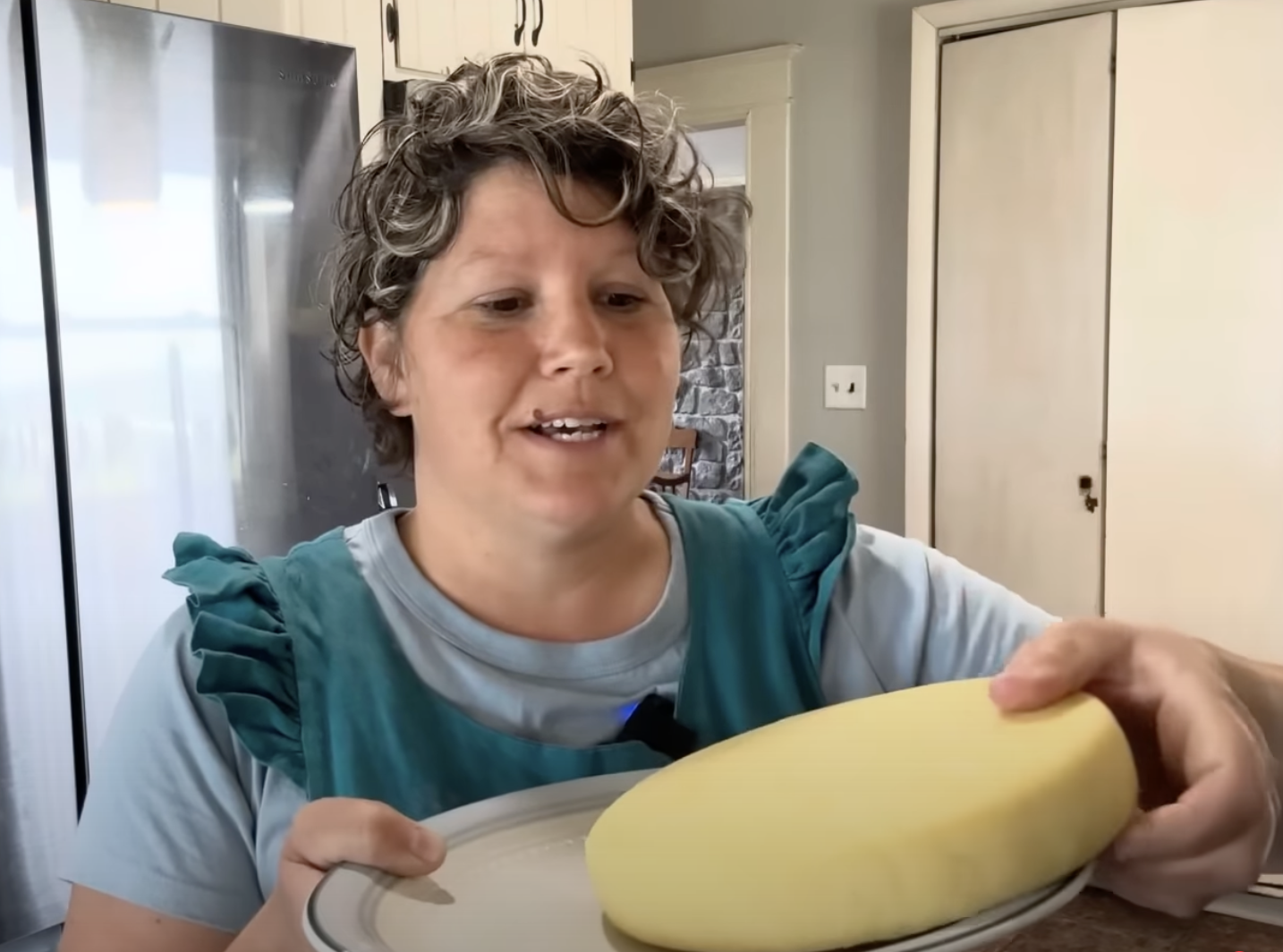
- Age at 50℉ for 4-6 weeks.
Notes
How to video on our YouTube channel: Homesteading with the Zimmermans