Plants like nettles, dandelions and comfrey, and many more, have long tap roots, reaching nutrients deep within the soil that most annual plants never get access to!
This is one reason these ‘weeds’ are Beneficial!
Another advantage of these plants is that they haven’t been altered or selectively bred for traits such as size, tenderness, or visual appeal.When a plant like spinach for example is selectively bred to be tender with large leaves the nutritional profile is rarely if ever considered! The spinach that has large leaves, doesn’t wilt easily, and looks appealing on the shelf is what makes a profit for commercial growers! If we were to compare the nutritional profile of wild spinach (lamb’s quarter) and the modern varieties we are growing now, we would surely be disappointed at the lack of nutritional complexities in the beautiful modern-day spinach. An easy place to start developing your skills for foraging and using beneficial wild plants is to find a plant that you are already familiar with and that is easy for you to identify!
My easiest plants are dandelions and stinging nettle! Then learn everything that those plants are good for and every way to use them! As the seasons change add one more easily recognized species! In this way adding to your skills little by little instead of trying to master the art of herbalism all in one season.
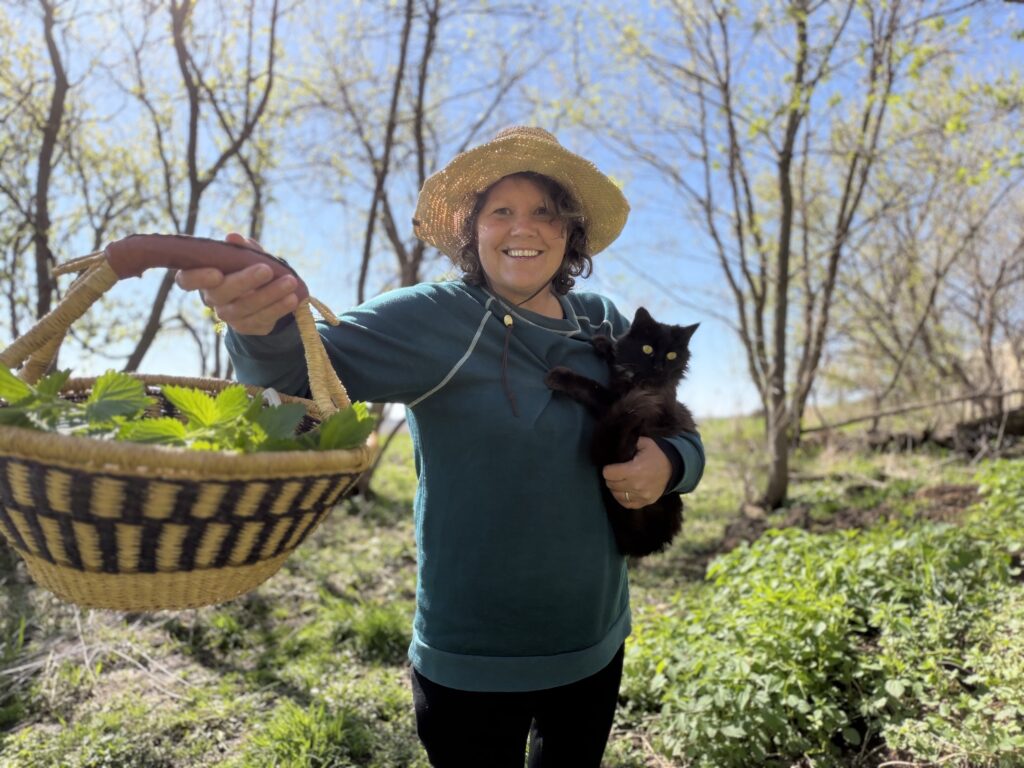
Foraging for Stinging Nettles
Benefits of Stinging Nettles
Anti-Inflammatory
Rich In Minerals
Rich In Vitamins C & K
To Create Stinging Nettles Vinegar Extract:
Harvest young tender nettle leaves and tops
To make a vinegar extraction:
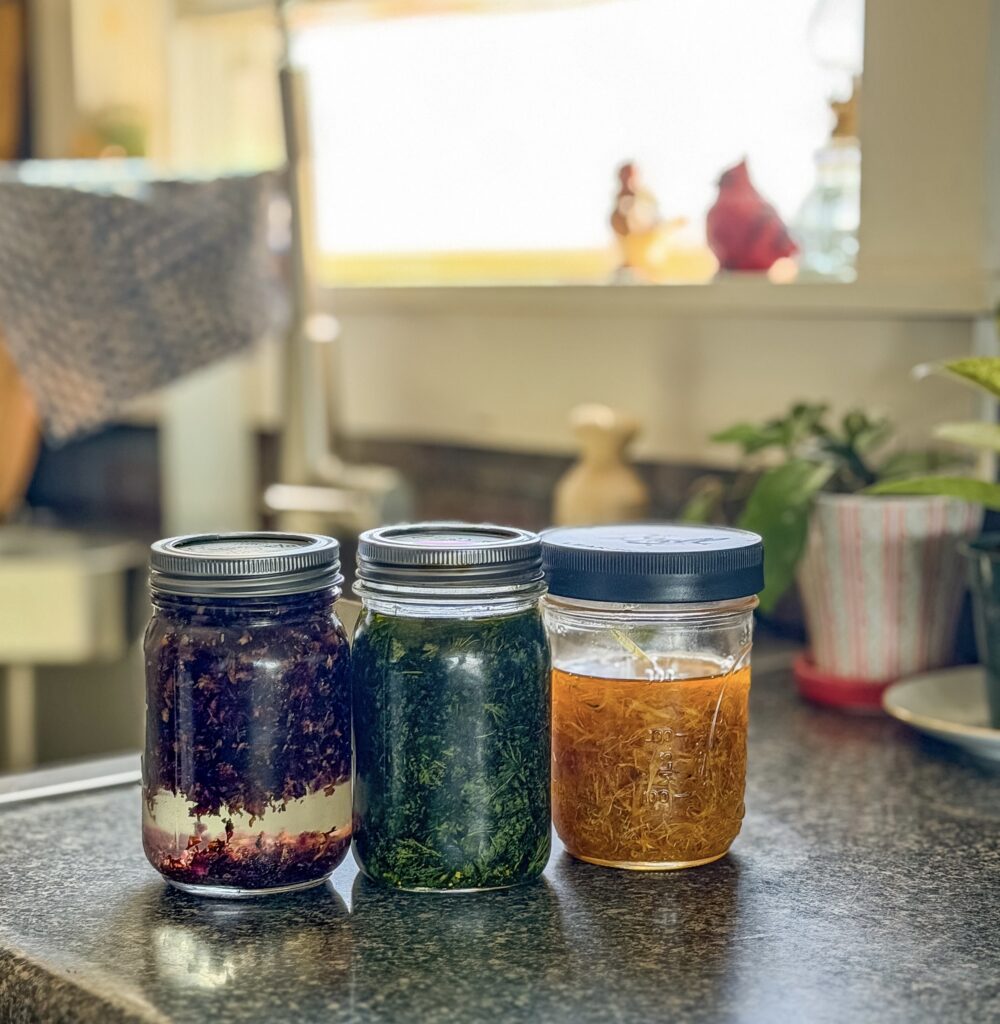
Fill a jar, any size, 3-4 of the way with nettle tops and young leaves. Fill the jar the rest of the way with raw apple cider vinegar. Mix everything together and cover with a plastic lid (vinegar will corrode a metal lid and contaminate your extract) set in a cool dark place for 4-6 weeks, shaking occasionally.
Uses for nettle extract:
Mineral supplement. Mix 1-2 T. nettle vinegar into 8 oz water and drink before each meal.
As a hair rinse. Very helpful for dandruff and other scalp issues, removes product build up and balances scalp PH. Mix 1-4 T nettle extract with 2 cups water and apply to wet, clean hair. Massage into scalp thoroughly, let it sit for 2-5 minutes a rinse thoroughly.
To Make a Nettle Tincture:
Fill a jar 3-4 full of fresh or dried nettle leaves and tips fill the jar with 80-100 proof vodka. Let it sit in a cool dark place for 4-6 weeks, shaking the jar occasionally. After 4-6 weeks strain the vodka from the leaves and store the tincture in a dark dropper bottle for 2-4 years.
Uses for nettle tincture:
As a mineral supplement, to combat allergy symptoms, to ease joint inflammation and for urinary track support.
1-2 droppers full in 8 oz water 1-3 times daily.
To Make a Nettle Infusion:
Fill a jar ¾ of the way with dried nettle leaves. Fill the jar the rest of the way with oil of your choice. I like Jojoba or Caster oil best. Let sit in a cool dark place for 4-6 weeks (or longer) then strain the leaves from the oil.
Stuff 5-gallon buckets full of Nettle plants before they bloom. Stems leaves and all! Don’t bother washing them. I often do this later in the season after the leaves and tips are no longer tender enough for tinctures and extracts. Fill your buckets to the top with rainwater or well water, place lids on and set in a warm sunny place and let the plants ferment! Stir occasionally. It’s ready after 2-4 weeks, depending on how warm your weather is. You will know it is ready when the water is very dark and very stinky. Strain out the fermented plants and add them to your compost pile to give it a boost of bacteria. The remaining water is your fertilizer.
How to use Nettle fertilizer:
For young annual plants and seedlings dilute the nettle fertilizer 1:10. 1 part fertilizer to 10 parts waters. For established annual plants I dilute 1:5 and for perennials like berry bushes, fruit trees and grapes I dilute 1:2. Use weekly if possible. But even a couple doses during the growing season are beneficial. The addition of fermented fertilizers like this also adds beneficial bacterial to your soil!
Harvest your dandelion roots in the morning or after a rain by digging down as deep as you can with a dandelion lifter or a shovel. (always harvest dandelion roots from untreated areas)
Scrub and chop the dandelion root into ¼ to ½ inch pieces and place on a baking sheet. Roast cleaned, chopped dandelion roots at 350°F for 30-60 minutes or until brown. Stirring once or twice.
Light roast will smell a little like chocolate, a darker roast will smell more bitter like a dark roast coffee. Store toasted root in an airtight container for up to 3 months or in the freezer for up to 12 months. You can also grind the roasted root in a coffee grinder.
To serve:
Steep 1-2 teaspoons of roasted root in very hot water for 10-15 minutes for a coffee-like beverage.
Dandelion Greens
Harvest tender green dandelion leaves from untreated areas before the flower buds appear.
Clean the greens like you would clean lettuce.
You can make a fresh tea by steeping ¼ cup chopped leaves in hot wat for 5-10 minutes.
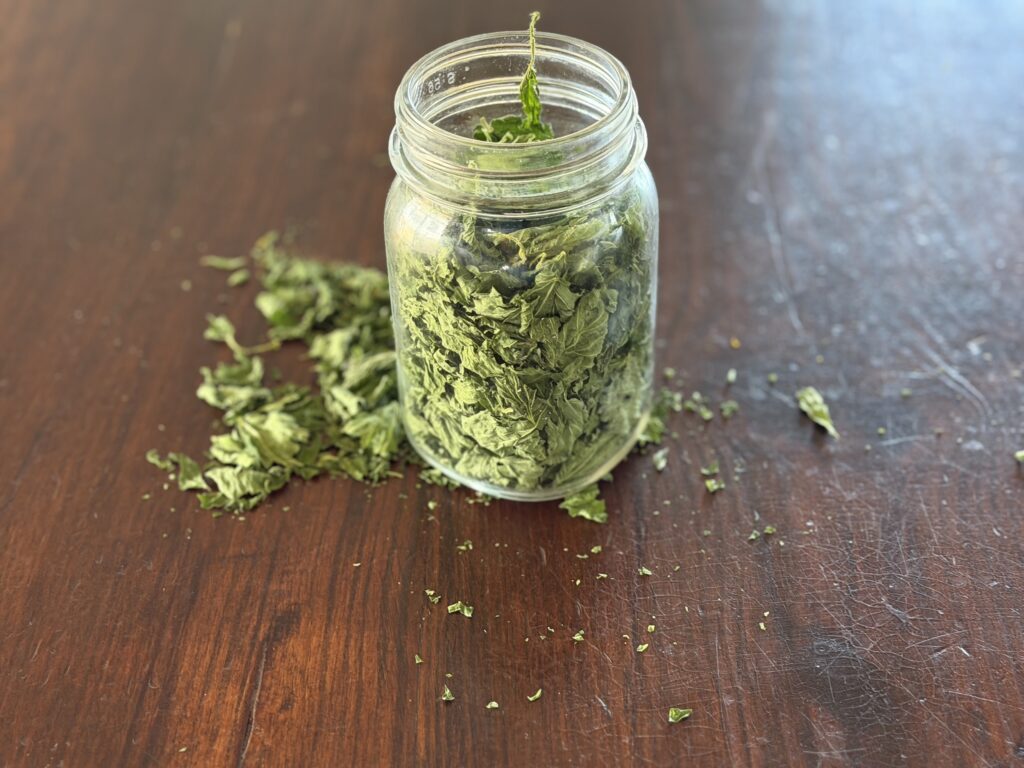
You can preserve the leaves for later use by dehydrating/drying them.
Chop the tender greens and add to your salad.
Dandelion greens have a bitter taste (this is how they help with digestion, the bitter taste activates more digestive juices) so it is best to pair them with fats (hard boiled eggs, cheese, oil) and acids (vinegar or lemon) in a recipe.
I like to harvest the flowers, partially dry them and infuse them into oil and then use the infused oil to make moisturizer. The compounds found in dandelion flowers have antiaging properties.
I love your videos. I like that when you mention your spritutial life you arn’t “judgmental” about that,. I grew up in a fundemential traditional religion, it wasn’t for me or my husband, so we left and took alot of heat from family and friends. However my relationship, with my heavenely father and the holy sprit changed alot but never left me. So thank you for that.
I watched you make garlic mustard but Im not sure of how to make it. I picked some leaves this morning but you pored something over them, was it just water and let it rest overnight .. Is the recipe listed somewhere? Love , Elizabeth
Thank you Ruthann, ive been watching you for a few years now.. thank you for sharing your knowledge, and experience..ive bought your book and waiting for the next one .more cheese recipes please…
Thank you for the dandelion video. But when i saved my dandelion flowers last year to make the infusion . They all went to fluff☹️. So all my time picking& separating the stems was wasted . Does that mean it has to be done quickly?
This is a common problem, you are not alone. Try drying them for a shorter time and before removing the green part. Some folks don’t even dry them, but simply add to the oil without drying.
Thanks so much for the recipes. I have been trying to find recipes like your to stay away from chemical alternatives. My Grandma used to treat us with all natural remedies, feed us home grown animal meats, eggs, raw milk, produce from backyard and pots, and we were never sick. I appreciate your hard work, dedication and devotion, but most of all, the love for the Lord.

11 Responses
I love your videos. I like that when you mention your spritutial life you arn’t “judgmental” about that,. I grew up in a fundemential traditional religion, it wasn’t for me or my husband, so we left and took alot of heat from family and friends. However my relationship, with my heavenely father and the holy sprit changed alot but never left me. So thank you for that.
I watched you make garlic mustard but Im not sure of how to make it. I picked some leaves this morning but you pored something over them, was it just water and let it rest overnight .. Is the recipe listed somewhere? Love , Elizabeth
thank you for your you tube channel
Thank you Ruthann, ive been watching you for a few years now.. thank you for sharing your knowledge, and experience..ive bought your book and waiting for the next one .more cheese recipes please…
TY
I made dandelion jelly one year with the dandelion blossom petals. Very tasty!
I was wondering if dead nettle plants or parts of the plant have any health benefits and if so how do I use them?
Love watching and learning with you and your family! May Lord bless you and keep you and shine his face upon you! Always giving peace!
Thank you for the dandelion video. But when i saved my dandelion flowers last year to make the infusion . They all went to fluff☹️. So all my time picking& separating the stems was wasted . Does that mean it has to be done quickly?
This is a common problem, you are not alone. Try drying them for a shorter time and before removing the green part. Some folks don’t even dry them, but simply add to the oil without drying.
Thanks so much for the recipes. I have been trying to find recipes like your to stay away from chemical alternatives. My Grandma used to treat us with all natural remedies, feed us home grown animal meats, eggs, raw milk, produce from backyard and pots, and we were never sick. I appreciate your hard work, dedication and devotion, but most of all, the love for the Lord.
Thank you so much for sharing 💖💖💖