
May 10th-16, Week 7
RuthAnn’s Weekly Garden Diary
Documenting Progress and Reflections in the Garden
My attempt to document the planting, growth, harvesting, and preserving of our family’s 8000 square feet of garden.
Northeast Iowa Gardening in growing zone 4
Last frost date May15, First frost date September 15
May 10th-16th, Week 7
This week brought us to our last frost date! This means it is now considered safe to plant summer crops/cold sensitive plants/seeds into the garden. However, it is important to look at the 10-day forecast before I plant because average last frost date means approximately ½ of the time the last frost is before the 15th and half of the time it is after the 15th. This means there is a 50% chance that our last frost can happen after May 15th. The 10-day forecast shows some nighttime temperatures in the 40s (which heat loving plants won’t love) but no frost! So, I made the decision to plant since the soil conditions were dry enough to prevent compaction.
We have received no rain for 2 weeks. Things are dry and dusty!
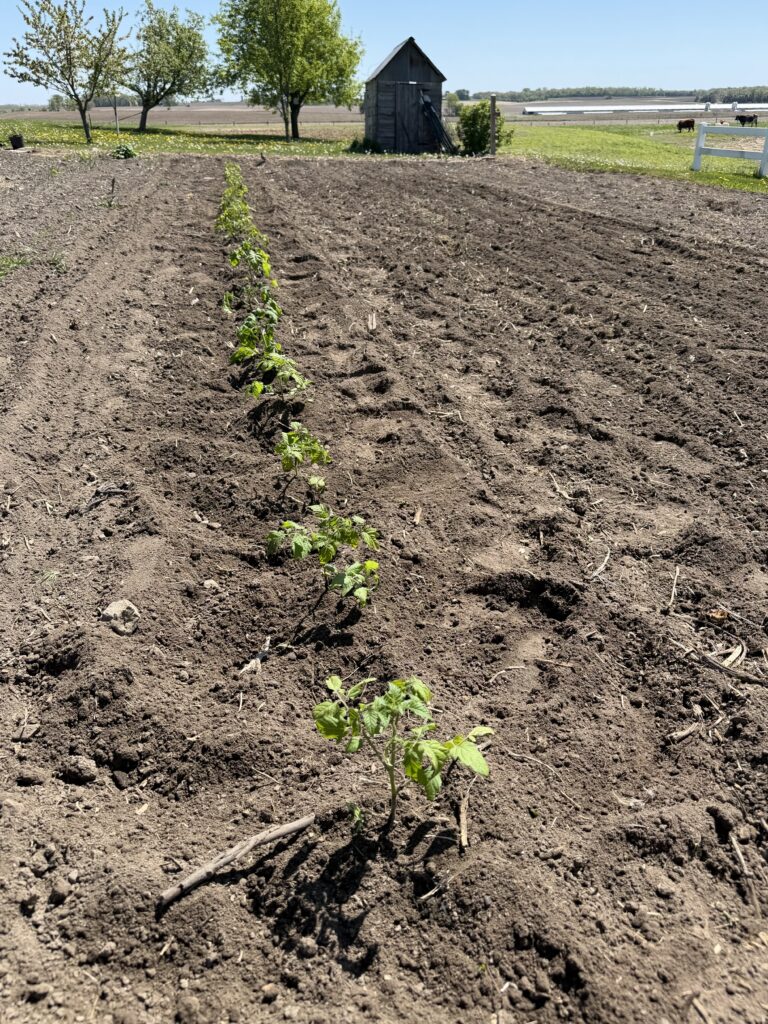
What I planted this week:
- 20 Amish Paste tomato plants (for all our canning needs)
- 4 Brandy Wine tomato plants (for slicing and fresh eating)
- 4 sun gold tomato plants (for snacking on while gardening and to add sweetness to my tomato products)
- 8 Cucumber plants *Straight 8 variety (for fresh eating and fermenting.)
- ½ lb. bush beans *Jade variety (for canning and fresh eating.)
- 250 seeds of short season sweet corn (68 days to maturity) *Temptation variety (for fresh eating.)
- 750 seeds of long season sweet corn (82 days to maturity) *Serendipity variety (for freezing.)
- Lots of Zinnia Seeds *California Giant variety, original seeds from Sow Right Seeds
- Planted the rest of my Cana and Dahlia bulbs
If you have been here for any of my gardening seasons you already know that I don’t water my garden! In fact, in the 25 years that I have gardened here I have watered my garden less than 6 times. With the exception being, when I transplant seedlings into the garden.
I like to use my compost tea to water seedlings when I transplant them to reduce transplant shock. Transplant tea is simply fermented plants. My favorite plants to use to make compost tea are, comfrey, stinging nettle, and burdock leaves. These plants have very deep tap roots and draw minerals from deep within the earth where the roots of most annual plants in our gardens never reach. When we ferment/rot the foliage of these plants in water those nutrients are released into the water creating a very rich concentrate. You can find the video on compost tea here. For Seedlings I mix 1 cup compost tea to every 1 gallon of water. When I am watering more mature plants I add 2-3 cups compost tea per every gallon of water.
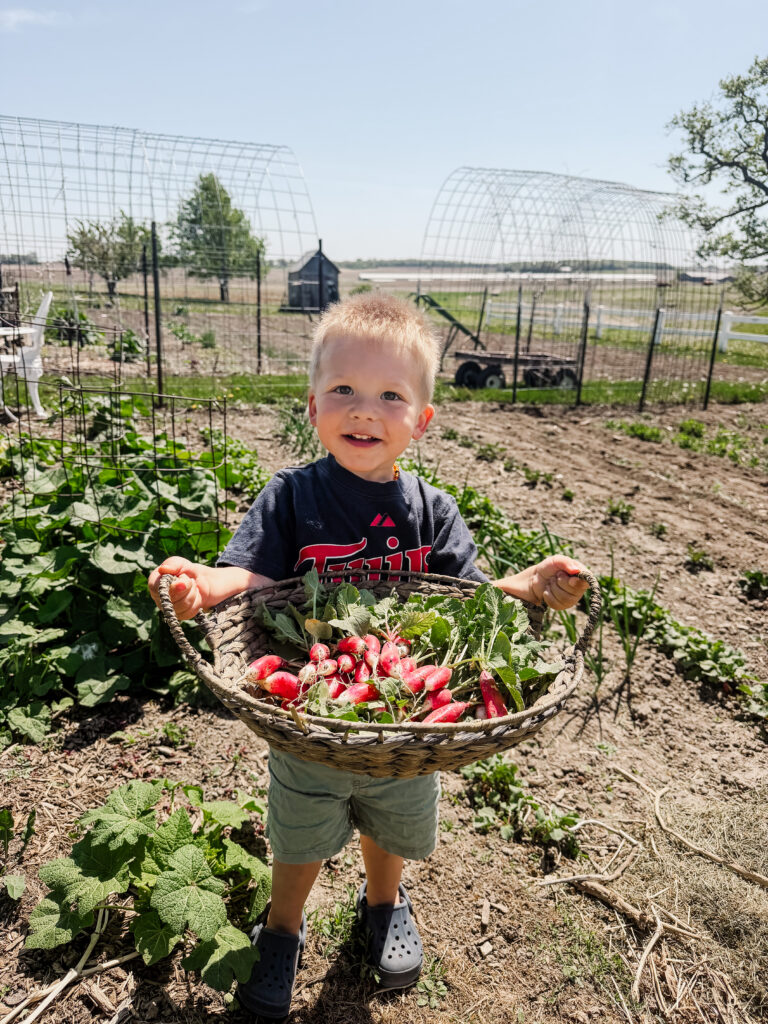
Have your tomato seedlings ever turned purple after you transplant them to the garden? Here’s why.
Tomatoes are a true hot weather crop (me too tomatoes, me too) and for them to able to absorb nutrients the soil temperature needs to be a minimum of 60°F. When soil temps are below 60°F you will see their leaves turn purple from a phosphorus deficiency. Although the phosphorus may be there in the soil, the plant simply can’t absorb it.
In colder regions, like here in Northern Iowa, there are a couple tricks to help our tomatoes accumulate Growing Degree Days in the spring.
- Using black plastic will warm the soil by 10-15 degrees around the roots.
- Planting tomatoes into raised beds. Soil temperatures in raised beds are often warmer than in ground gardens.
- Shallow planting. (This is the method I prefer.) Since the top 6 inches of the soil will be warmer than the soil 12 inches deep, shallow planting simply means planting the tomatoes into the top, warmest section of the soil. My tomato plants this year were very leggy, but I still planted them just below the surface and lay the plant down sideways, covering the long stem with soil (it will grow roots and support the plant too) only allowing the top 5-6 inches and the ‘heart’ of the tomato plant to be above the soil. I also wait to cover the surrounding soil with compost or organic matter until the soil is staying consistently above 60°F. Covering the soil will keep the soil cool, great for cool weather crops, but not helpful for heat loving crops. I don’t take the temperature of the soil I just watch the plants for new growth and signs of thriving. When nighttime temperatures begin to stay above 50°F and daytime highs are in the 80s then the soil temperature is sure to be over 60°F and I’ll add compost or organic matter to help keep weeds down, provide nutrients and keep moisture levels consistent.
Reflections
Lack of rain fall always causes me to pause and remember who the master gardener really is. I have zero control over the rain that falls from the sky. And even though God doesn’t expect me to be in control of precipitation, he does have expectations from me during dry seasons. He expects me to be in control of my attitude and thought life during dry seasons. Am I fretting and worrying and getting caught up in the negative conversations around me? We live in a crop farming community, everywhere you go there’s talk about the weather, and it is hard not to get caught up in the worry. But God calls us to trust him and have faith. Faith that He is working for our greater good even when we cannot see it. As a Gardener I have witnessed this firsthand!
In the weeks without rain my garden crops seem to come to a standstill. To the unfaithful eye not much seems to be happening, no new growth, no blossoms, and sometimes even visible stress to the plant. But below the surface, in the darkness, something unseen is happening. Something unseen, that if allowed to happen, will yield wonderful, positive results. The root system of the plant is reaching far down into the earth to reach moisture. And when the root system reaches down deep into the earth it also finds a wealth of nutrients that are not available at the surface of the soil. The nutrients that the plants find down there in the deepest parts of the garden help it to grow into a vigorous plant that is disease resistant and will bear a greater harvest than if it had been watered daily or received rainfall every few days.
My favorite Bible verse to recite in the garden during dry seasons;
Jeremiah 17: 7-8
Blessed is the man who trusts in the Lord, whose trust is the Lord. He is like a tree planted by water, that sends out its roots by the stream, and does not fear when heat comes, for its leaves remain green, and is not anxious in the year of drought, for it does not cease to bear fruit.”
When we are going through a ‘dry or dark season’, if we trust and lean into the truth that God is Good, He cannot make mistakes and believe that He is doing work even when we can’t see it, our spiritual life will be stronger, more vigorous, and bear more fruit.
Other Recent Posts


Most Recent Posts


16 Responses
I am loving your garden journal! I love the gardening info and the Biblical references. You should write a Christian gardening book!
At the respectful age of 71 I am learning so much from you. This past Fall I followed your videos to learn how to can, went a little nuts about it as we are only two in our household.
We live in Quebec, Canada by the St.Lawrence river which gives us a nice microclimate. Zone 4B
Today is vegetable planting day so reading your diary inspires me.
Thank you
Filomene
Thank you for the radish recipes. I love radishes, so I’ll definitely have to try a few of yours. I like just eating them plain with some salt on them. My mom Would eat them on a sandwich just like you showed thanks again Debra Ogilby
You’re such a sweet soul
It’s a pleasure to watch you and learn
All of Maryland is in a drought but we are getting rain this Memorial Day weekend.
I planted my plants anyway with the hopes God will take care of them in his way and time. Just have to have faith.
l really enjoy reading your comments on growing etc. You have such knowledge on plants. Explain it so well. Congratulations on your grandchildren. God bless you and your family.
I have always planted my tomatoes this way. Stripping the bottom leaves and laying the stem on and covering it all except for the very top it creates a very strong tomato plant and more roots to tap into moisture.
Thank you for the update! Having grown up in Minnesota/Iowa I miss the ability to grow such a diverse garden. Here in Montana, you need a greenhouse, as I live at the bottom of a mountain even our summer evenings are cool and generally in the mid 40’s. I much appreciate the Bible verse, it is a good one to write down.
Thank you Ruthann for your gardening tips and scripture verses, they really very heart warming, and heart felt. May God bless you greatly in all your endeavors.
Thank you for this gardening wisdom. I learned so much and also for your heart and attitude concerning God’s goodness and faithfulness–trust Him!
Wonderful words of wisdom
Thank you 💖💖💖
I learned from your teaching today. I thought the garden would die w/o daily or semi daily water.
These garden journal entries are fantastic. THANK YOU. I am learning so much and feel inspired after every one.
I have found your wonderful weekly garden diary. I’m sharing them with my daughter who is growing a smallish garden to feed her largish browning family. Baby number 10 due end of the month.
Wow!! What an incredible inspirational scripture. And I love the inclusion of the analogy relating to gardening. I’m in central Wyoming, which is very dry and our last frost date is about 2 weeks after yours. Following your post works perfect for me. It makes my life so much better.
I’m very grateful. I just found your blog but I’ve been listening and watching your YouTube channel for a long time.
Thank you, RuthAnne, your wisdom and words add appreciated insight!! Garden wishes for a great season 🌿
I especially love your comments concerning being in a dry season, as my family live in yhe “high desert” of Utah we are very familer with having dry seasons with this year being a particularly bad draught year. We can’t not water our garden bit still trust the Lord to help it thrive despite having to cut back on our water usage.
We will pray over our garden.
Cathie