
May 30-June 6, Week 10
RuthAnn’s Weekly Garden Diary
Documenting Progress and Reflections in the Garden
My attempt to document the planting, growth, harvesting, and preserving of our family’s 8000 square feet of garden.
Northeast Iowa Gardening in growing zone 4
Last frost date May15, First frost date September 15
may 30-june 6, week 10
It is June! The month that I begin to anticipate each year after the exhaustion of harvest season and the excitement of the Holidays is over! When visit other states and am tempted to be envious of their warmer winters, beautiful terrain, or lovely plants I often remind myself that June in Iowa is worth everything else we endure!
What we harvested this week:
- A quart of strawberries (fresh eating)
- Spring onions (fresh eating)
- Lettuce (fresh eating)
Spinach has gone to seed Before I got any blanched and into the freezer. I don’t use frozen spinach but had planned to freeze some for our daughter’s freezer since she uses it.
Other Garden Tasks:
- Weeding, always weeding
I like to be all caught up on weeding before we leave the Homestead, (To the TN Homestead Festival this time) Because one thing that I hate more than coming home to a dirty house is coming home to a weedy garden. But not simply because of how it makes me feel. But also, because I and the plants can quickly become overwhelmed and stressed when there is too much weed pressure. Just like the weeds rob the crops of nutrients and light, too many weeds in my garden also rob me of the joy of gardening. There is always a subtle shift in my gardening that happens in late summer, a shift from pleasure to duty. Keeping up with the weeds is my way of preserving the pleasure stage as long as possible.
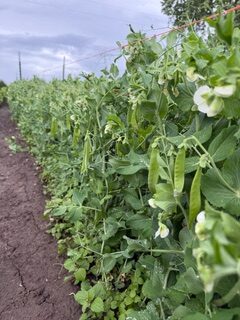
- I tilled down the few bush bean plants that germinated! They germinated so poorly. From ½ pound of seeds I had a dozen plants. I decided to start over and try again. When I posted on Instagram about this, many folks responded that they have the same problem this year and some had it last year as did I. Jade variety is what I planted, and many local folks responded telling me their Jade variety beans germinated poorly as well. Here are some Ideas about what went wrong with the bean crop.
- Cool, wet conditions after planting caused the seeds to rot before sprouting.
- Cool, wet conditions delayed sprouting, allowing root maggots (larva of flies) to eat the heart of the seeds. This is the most likely scenario in my opinion because this area of the garden had a heavy layer of compost last fall and likely contained more larva than an area that was bare soil over winter.
- Birds, black birds or sparrows, which we have an abundance of, are nibbling the leaves off the sprouts as soon as they immerge. Could also be rabbits or deer but normally when rabbits or deer are the problem, I also see their droppings or tracks in the vicinity, and I didn’t see any of those.
- The Jade variety is losing its vitality. Although I do not think this is the case, I do think that the jade variety, which is a hybrid variety is more susceptible to adverse planting conditions. (More about hybrids vs. heirloom a little later in this entry)
Steps I will take when I replant:
- Watch the forecast for a warm and dry week, If the beans sprout faster the root maggots will have less time to do damage. A warm week will also mean that the bean sprouts leaf out faster and if pests like birds or rabbits are my problem they will lose interest after the plant has multiple leaves since they are more attracted to those first tender sprouts than they are to any other part of the plant.
- Soak the bean seeds in water for 24 hours before planting them. This will also shorten the amount of time they spend in the soil before they sprout. Normally a seed lays in the soil absorbing the moisture for a few days until the skin bursts and the life that is inside the seed sprouts forth. Soaking them in water first eliminates the need for the seed to absorb water from the soil and rushes sprouting.
Heirloom vs Hybrids:
Why Heirloom over Hybrids? This has always been my question!
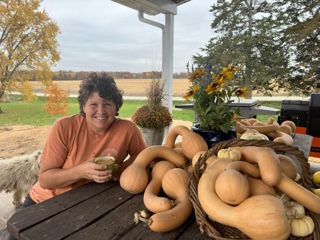
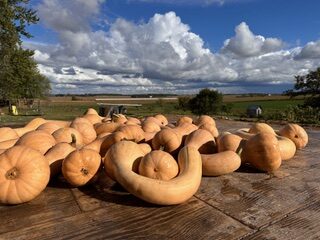
When I planted my first heirloom variety of squash, tromboncino, I noticed a difference in that first growing season! The first thing I noticed was that the squash bugs, that were eating my zucchini plants were not attracted to the Tromboncino squash.
That’s cool, very cool. BUT WHY?
I have been a believer in heirloom varieties since that season but have also questioned the science behind my experience, and that of many others, since that first season.
Until recently I asked the right person and my questions were answered!
I had the opportunity to visit with David Steltzer who founded and owns Azure Standard. Since they sell seeds, including many heirloom varieties of seeds, I asked him to explain to me why heirloom varieties, not only are more disease resistant (I can understand disease resilience) but why are they more pest resistant?
He was gracious to answer my questions that day, and not only did I learn the answer to my questions, but I also came away with a deeper relationship forming between myself and God as I developed a new understanding of the heart behind His creation!
Why are hybrid varieties of crops more susceptible to disease and insects?
When varieties are hybrid, they are bred for commercialization, in a way that will make the most profit for everyone involved. The plant breeders focus primarily on:
- Aesthetics; predictable size, shape and appeal to customer.
- Ship ability; How the crop holds up when shipping hundreds and thousands of miles, and how long it holds its shape and firmness during shipping.
- Harvest: Higher and more predictable yields.
Since mainstream commercial farmers use fungicides (for disease prevention) and pesticides (to kill insects) as a preventative measure to ensure their crop and therefore their profit, these hybridized plants, even though plant breeders say they breed them to be more disease resistant, seem to be highly dependent upon toxic treatments to yield a crop.
Because the focus when hybridizing plants is never ‘higher nutrition’ but the above-mentioned things, nutrition complexity of the resulting hybrid plants are compromised and instead of complex sugars like their heirloom ancestors these hybridized plants have very simple sugars.
Why these simple sugars make hybridized plants more susceptible to pests and diseases?
Simple sugars in hybridized plants directly mimic a stressed plant. Insects are created by God to be attracted to simple sugars because this is the way the eco system is designed to prevent weaker plants from producing more weak plants. Plants that are stressed break down their stored starch into smaller sugar units to shield themselves from cell damage and to more effectively deal with a stressful environment. These complex sugars give off a pheromone that attracts the insects. Much like little boys are more attracted to the simple sugars, (corn syrup) in gummy worms and chocolate than they are to the complex sugars of plums and pears, sap sucking insects like aphids and squash bugs are more attracted to the sap of hybridized varieties of plants or stressed plants because of the simple sugars they contain.
Are Hybridized plants no good then?
For me and my garden it is a case-by-case scenario. Because as with all things balance is key! Tromboncino squash has replaces all our other squash varieties most summers (yes even summer squash) because it is trouble free, produces vigorously, stores well, and we love the taste. I don’t blame commercial growers for not growing it though because it sure isn’t uniform and won’t fit neatly onto grocery store shelves!
Sweet corn? The hybridized varieties sure taste much better than the heirloom varieties. It also tastes much better when frozen or canned than heirloom varieties and it is all because of those simple sugars rather than the complex sugars of the heirloom varieties. I plant the hybrid variety, Serendipity.
Reflections
Life is all about balance and nothing brings balance to my life quite like my relationship with Jesus.
When I am tempted to fear the lack of complex nutrition found in hybrid fruits and veggies, He reminds me that nothing here on this earth is ever going to be perfect! If this world were perfect, we sure wouldn’t long for heaven.
The world and is desires pass away, but whoever does the will of God lives forever. 1 John 2:17
My time and energy are better spent building eternal relationships (yes this can happen while we are weeding the garden) than to worry and fret about the nutrition or lack of nutrition in the plants I am growing. Also, a large consolation to me is the fact that healthy soil plays a large role in the nutritional complexities of the crops we are growing!
Balance to me looks like raising heirloom varieties of crops that we love and focusing on the health of our soil to increase the nutritional value of the crops that we choose the hybrid varieties of.
Other Recent Posts



Most Recent Posts


21 Responses
I am not familiar with the Tromboncino squash. I’m curious if you have a video on how to prepare and put up that type of squash?
Last year I had the same problem with my beans ,I had to plant them three times . So this year I covered them with screen (like tule) after I could see them peeking through the ability and that kept the birds from getting them . It worked wonderfully
I just watched your video today, and had to come over to the blog. I too had very poor germination of my “jade” variety of green beans. Not only poor germination, but the ones that did were bug eaten. I replanted but wonder now if I should have looked for a different variety. Your garden is lovely, btw. I always enjoy your garden tours.
Hi Ruth Ann, in your garden tour you showed a plant you called lambs ears. I know it as lambs quarters. Do you let it go to seed??
I love your youtube channel.
Thank you for sharing this information!! As someone who has done very time consuming battle with squash bugs this is really helpful. This information isn’t very easy to find.
I love watching all your videos and learning new tricks ( at age 73 ) have a 40 acres organic farm but always learning more . Been 4-h leaders fur 30 years working with kids . Love the way your kids are involved in daily chores and responsibilities . I admire the way you encourage your kids !
Thank you.
Your reflection reminds me so much of the line in the poem about gardens- “one is nearer God’s heart in a garden than anywhere else on earth”.
Thank you so much for all the eye opening information!! Heirloom for us from now on!!
Have a blessed day!
Our Bushmaster cucumbers sprouted then disappeared before leaves emerged, and only one bean out of an entire row of green beans sprouted. I have replanted, we have had heavy rains, and see few insects. 90 degree days, 80 degree nights, in central Texas. We still have time for a good harvest if seeds will sprout. Let’s all pray to be blessed with successful gardens!
We also have had a lot of rain in Ohio. I planted Jade beans around June 5th and they are up already. They germinated beautifully. However, they were planted in a raised bed. Love your garden diary. Looking forward to seeing you at Seed to Spoon next week.
I can truly say that I have learned and finally understood some life lessons while spending time in the garden. It has helped me return to better health than I was three years ago.
Great advice to know. Thank you
Your comment (as stated below) was something I needed to hear today. I would just like to add it’s not just the fear of the lack of nutrition (taste) but also the amount of chemicals and crap we are subjected to. I do the best to plant a garden each year, but this years garden is off to an abysmal start for a plethora of reasons, only one being weather. I remind myself that God gave me one heck of an immune system and “we” are still here in spite of all they try to do to us. That is proof that our God is indeed a powerful God. Amen! I have followed you for years, I love you, your family and your content. Thanks for sharing. I have learned so much.
(When I am tempted to fear the lack of complex nutrition found in hybrid fruits and veggies, He reminds me that nothing here on this earth is ever going to be perfect! If this world were perfect, we sure wouldn’t long for heaven. )
Thank you Ruth for your insight and great information!
Hi Ruthann,
I am so happy to get this read. I am from south central PA and I had the exact issue with Jade beans this year. I planted nearly a 1/4 pound of seed and only 4 plants came up. I even waited until the end of May to plant because I am always in a rush to get the garden in mid May. This has been so disappointing and frustrating because we love fresh green beans. I was thinking all along I had done something wrong. I am so relieved to hear others have had the same scenario with Jade beans.
Thank you so much for all your valued information. I follow your channel on YouTube and appreciate all of your content and advice. God Bless…..
Good afternoon,
You always pass on something that warms my heart . Thank you for sharing your inspiration and dedication to your family . It’s needed in our turbulent times . God Bless.
Thank you so very much! You are truly very inspiring please stay strong and know that your making such a fantastic contribution to this world and each of the lives your touching
I’ve had a problem I Lima, succotash beans and golden and yellow melons, along with my cucumbers. I used heirloom seeds for all my gardens. Everything else look beautiful.
Thank you for this helpful explanation!!
Thank you for this explanation!
I’m enjoying your garden diary!