
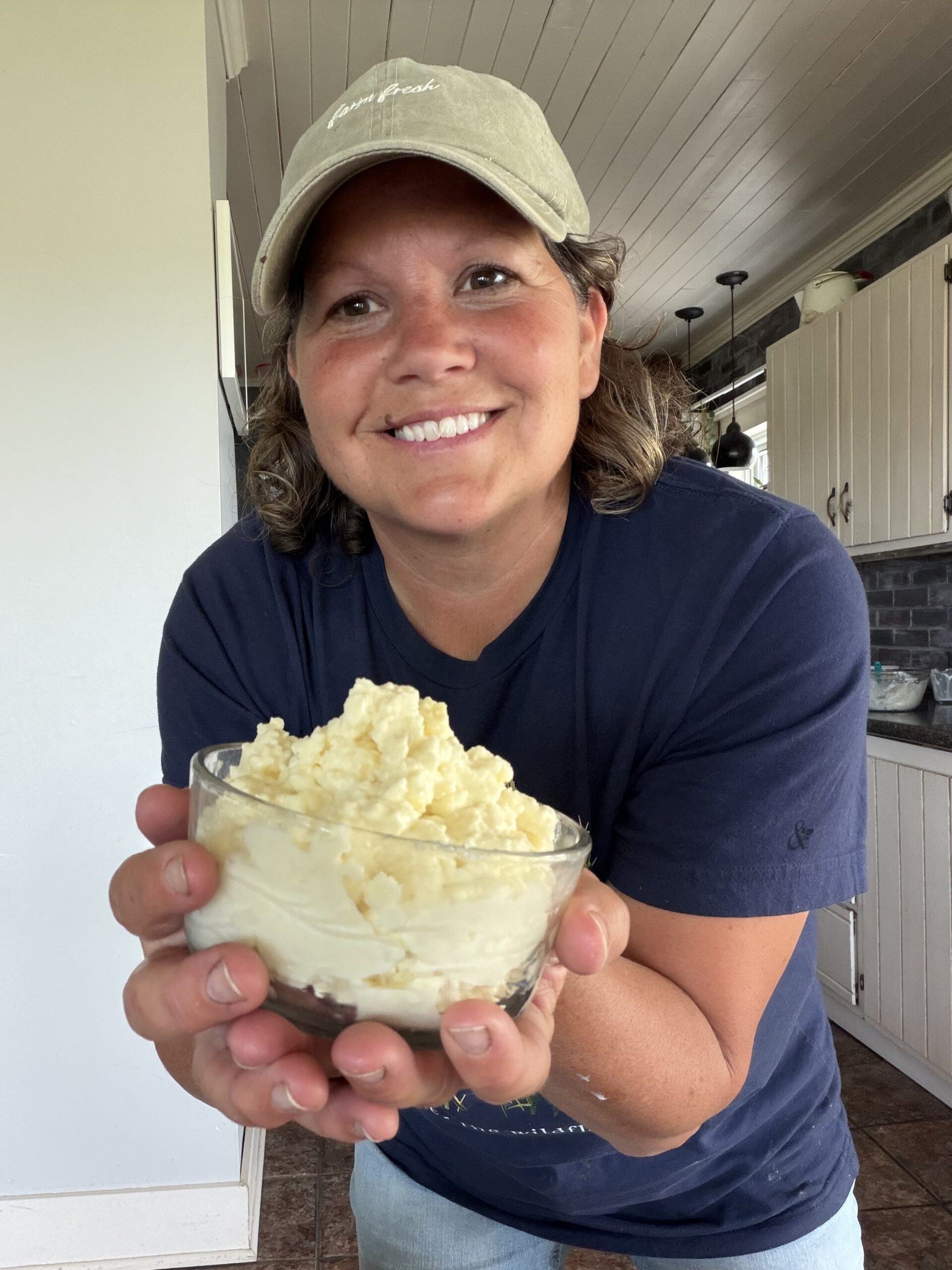
Ingredients
Method
- In a heavy bottom stock pot over low heat, slowly warm 1 gallon whole milk (skim milk creates a rubbery curd) raw or pasteurized milk is ok, just not ultra pasteurized to 185°F. The slow heating is one of the biggest keys to a soft curd. Heating too rapidly causes the proteins to bind too rapidly and squeeze out excessive amounts of moisture.
- Add lemon juice or white vinegar. Stir briefly to incorporate the lemon juice then let rest for 3-5 minutes. (if the curd hasn’t separated, stir in another ¼ cup lemon juice)
- Line a strainer with a cheese cloth and gently ladle the curds into the strainer. The more you handle the curds the tougher they will become.
- While your curds are in the strainer rinse them with cold water to stop the cooking process. The longer your curds stay hot the tougher they will become.
- After the curds are cooled down gently stir in salt.
- Then use a fresh cheesecloth and hang them to finish draining or put them in a cheese cloth lined strainer with something heavy on top (or a cheese press with light weight if you have one) I like to do this in the refrigerator to help the curds continue to cool.
- After 2-3 hours the whey should be done dripping, and you can crumble your curds and add the cream sauce.
- For Cream sauce mix cream and yogurt. Gentle fold this into the curds, make and add more cream sauce if you prefer a creamier cottage cheese. (The yogurt helps the cream sauce coat the curds instead of soaking into the curds.)
- Store In refrigerator for 7-10 days.
Notes
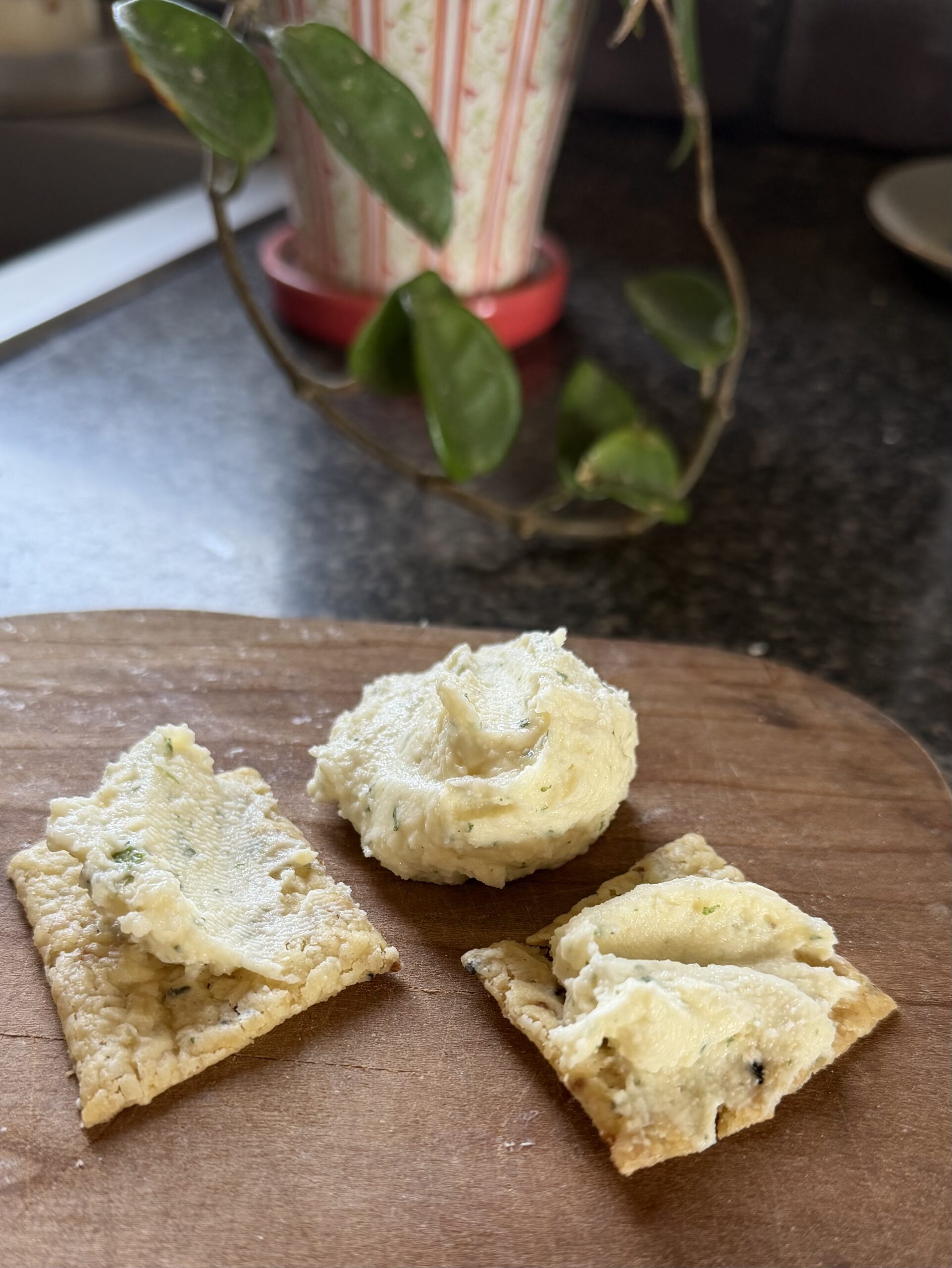
Use this to make Boursin style cheese..




6 Responses
Love all your recipes have you considered making a collection of all your recipes It would be a best seller for sure
Thank you for your recipes. We are enjoying them and your videos. Would love to purchase a future cookbook.
Your recipes are always so good! My wife and I love watching your videos. Takes me back to my childhood and growing up on the farm. So many of the old ways make so much sense today.
I have a weird question. Where did you get your clothesline? I think it is brilliant.
Thank you so much for this recipe. I’ve tried so many other cottage cheese recipes and never liked the results. Your explanations of how the curds are handled and why was so helpful. I made my first batch of cottage cheese immediately after watching your video and I’m delighted with the results!
Thank you for your recipes. I can’t wait till you have a cookbook available. I write down so many of your recipes. I am making huckleberry pie filling today using your blueberry pie filling recipe. Thanks again ❤️