Let’s talk about grapes! Why I like to grow them on the homestead!
They are a perennial. Plant them once and they produce for 50-100 years.
Grapes are known to send their roots 15-30 feet deep, through rocky soil to find the water and nutrients they need. This makes then a great homestead crop because they don’t need to be babied and fertilized. They will take care of themselves if given enough time!
Because of their extensive and vigorous root systems, these plants can absorb nutrients from deeper layers of soil that are inaccessible to many other plants, contributing to the nutritional value of their fruit.
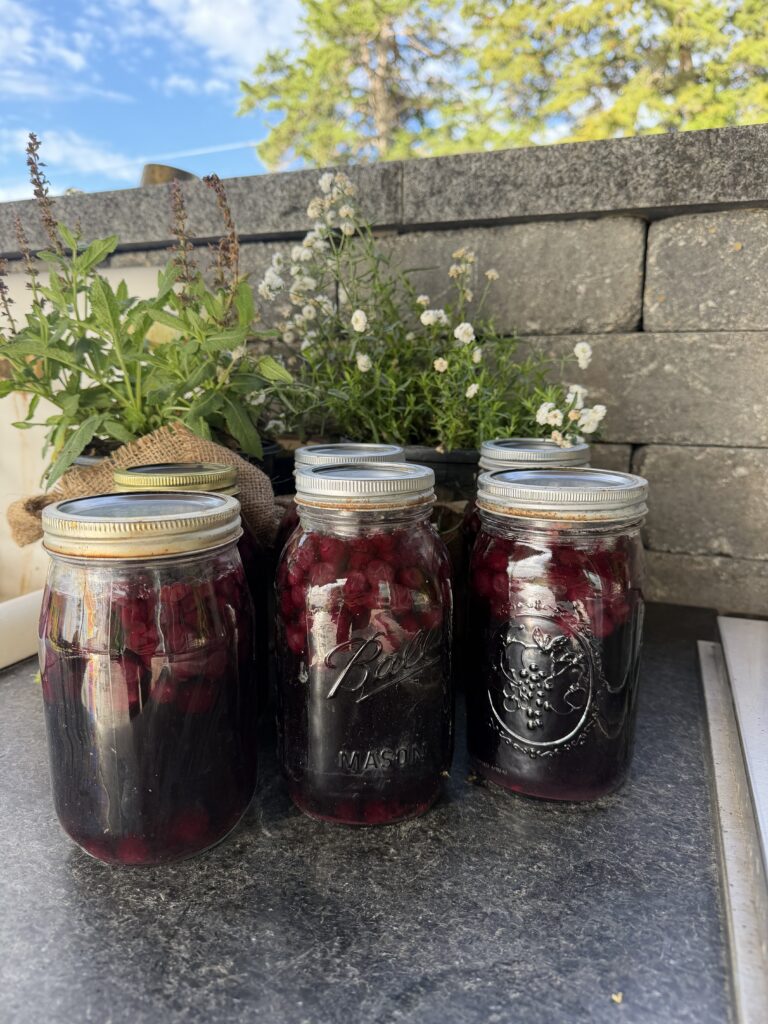
The deep blue and purple colors tell us that this fruit is high in antioxidants.
The are easy to propagate! I highly recommend finding a well-established grape arbor and asking the owner if you can have some cuttings!
I strongly encourage you to find heirloom varieties because they offer a more complex nutritional profile. Keep in mind that table grapes with their thin skins and no seeds are hybrids and are primarily bred for their marketability as snacks and not for nutritional content.
What varieties are considered heirloom?
The original Concord grape was cultivated in 1849 by Ephraim Wales Bull in Concord, Massachusetts. Because it is an open-pollinated, true-breeding heirloom, the original seeded variety remains the gold standard
If you stick to a seeded concord grape, you will be ok! All seeded concords are a direct descendant of Ephraim Bull’s 1849 selection. It features a large, deep blue-black fruit with the signature “slip-skin” trait (the thick skin separates cleanly from the green, pulpy flesh). It carries the ultimate, musky “foxy” aroma that defines classic American grape flavor.
Anything that is seedless or not ‘slip skin’ will be a hybrid!
I believe you can find bare root starts of the seeded, slip skin Concord from Stark Brothers Nursery!


10 Responses
I only wish I had known even a small portion of what I have learned from watching your videos when I was in my younger years. Now that I’m post 70’s I can only let others know what I have learned recently. Thank you for taking the time to teach the world how to live a more peaceful and fruitful life.
You re my favorite.
We appreciate you as well! Thank you for sharing your life and family with us.
Here in southern Italy, beans are an important store crop. Beans pods are left to dry on the vine, then picked and the dry beans are removed from the pods and stored. Beans are then rehydrated and used for dishes like pasta fagioli, (pasta with beans), throughout the winter. Pasta fagioli is one of those hearty winter comfort foods that people talk of with fondness, with each family perfering their mums or grandmothers recipe.
Thank you RuthAnn! You and your garden are inspiring!
Also, thank you for the directions on growing and propagating grapes. We just planted our first grape vines last year and all but two have survived this year’s drought. And always, thank you for sharing your lovely pictures and story of your lives.
For years my good man was in charge of the garden and I in charge of preserving. After his stroke we’ve had to have a change stewarding our outdoor space. The number of chickens was reduced and moved closer to the house. We’ve changed roles in gardening; he tends the perennial crops and I handle the annuals and landscaping. We’re not growing a lot but we eat fresh most of the year and I do can the venison our son shoots and the chickens my good man raises. One thing I’m having a problem with is adjusting to preserving for two. I’m finally caning in pints, not quarts, and freezing in pints as well. I can always pull out an extra jar or two when company comes. It only took me 20+ years to learn to do that!
RuthAnn – I’ve enjoyed your garden journal so much! I’ll never be a homesteader or grow the majority of our food, but you’ve given me so many ideas for my small garden this fall and next season. Thank you so much for your teaching heart. So thankful to have found you a few years ago! ❤️ xo
Thank You so much for sharing 💜
Always enjoy everything and am amazed at all you have accomplished. 🙏🏻💜😇
Thank you for your weekly videos . I enjoy them very much. The aminals ,the garden, and the family . I wish I would have had your book when my kids were little. . There are some real good things I could have taught them .I do have your 1st book , I really like it. God Bless you and your family . Your faithful follower Pam (from northern Illinois )