Our New Pig Plan and a Blizzard

Although March had arrived, the weather app began sending alerts and more certain predictions of heavy snow approaching our Northeast Iowa homestead, so I mentally reviewed the winter checklist. While inspecting the pigs’ bedding at their fence, it was obvious that Ruby, our mother pig, was extremely pregnant and would need to be relocated to a shelter before the storm arrived.

After talking it over with the family, we agreed to set up temporary gates inside the barn (which is essentially a shed we’ve converted into our winter milking area for cows) first thing on Saturday morning. This way, she will have a spot to farrow and keep her piglets warm during the expected snowfall and subzero temperatures!

Early Saturday morning, as I went out to handle chores, the unmistakable nursing grunts of a mother pig caught my attention. Instantly, I realized that moving Ruby to the barn was about to become a much more challenging task!

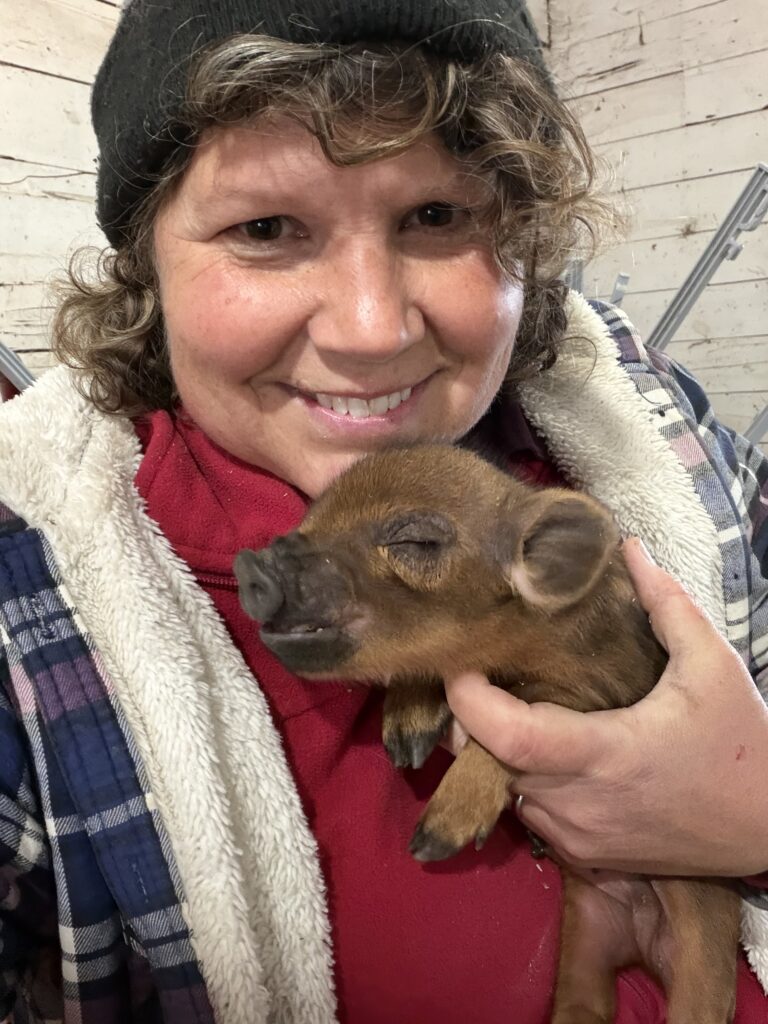
As snowfall began, we relocated Ruby and her seven piglets to the barn, where a heat lamp and clean, dry bedding had been prepared for their comfort. The entire process can be viewed on our YouTube channel. 

Our New Plan

We’ve found that raising our own pigs can get pretty costly unless we approach it thoughtfully. Unlike cows, pigs aren’t ruminants and can’t live just on grass, so we had to buy feed for them from the time they were weaned until they reached harvest weight, which usually takes 12 to 18 months.

Conventional pigs, the kind that are grown in confinement buildings and end up in your grocery store deli are lean, fast growing, have a great food conversion rate, (how well they turn food into muscle) and require an intense diet to reach their market weight in approx. 6 months.

Market weight is determined by the commercial industry as the point where maximum profit can be achieved.

Heritage breed pigs tend to grow more slowly and have a lower food conversion rate, often requiring 12 to 18 months to reach what is considered harvesting weight.

We raise Mangalitsa cross pigs because we appreciate their rich lard and exceptionally soft, tender   meat. Even when these pigs are bred with more modern breeds, they still need over 12 months to reach an ideal harvesting weight. For example, if piglets are born in January, we continue feeding them until the following spring before they’re big enough to process. This requires thousands of pounds of purchased feed, as well as extra milk and plenty of kitchen and garden scraps, just to raise two or three hogs large enough to fill our family’s freezer.

Every time the feed truck arrived with more pig feed, I couldn’t help but think, “There
must be a better solution.”

Here's our updated strategy for raising pigs efficiently to stock the family's freezer:

Farrow as early in the year as weather permits so piglets can be born outdoors, reducing the need for extra infrastructure. Our target was late March to early April, though this may change as we refine our approach.

We’re now changing how many piglets we keep compared to how many we sell. Previously, we would keep 2 or 3 pigs for ourselves and sell the rest after they were weaned. Under our new approach, we’ll keep 4 to 6 piglets for our own use. When November or December arrives, we’ll harvest these pigs regardless of their size, instead of buying feed to get them through winter. We believe that keeping 4 or 5 younger, smaller pigs will provide us with a similar amount of meat as 2 or 3 bigger, older pigs.

An essential component of this new plan is our two dairy cows. Both cows are expected to freshen in the spring when pasture grass is abundant, allowing us, even with calf sharing, to collect 4-8 gallons of milk daily throughout the summer. With this milk we will make many wheels of cheese, and stock the freezer with butter, and the resulting skim milk and whey will be placed in a large concrete trough as feed for our five weaned piglets. Skim milk has historically been a preferred method for fattening pigs. In addition to all this skim milk and whey, the piglets will receive garden and kitchen scraps, which should substantially reduce or potentially eliminate the need for external feed purchases.

After harvesting the piglets, we will only have to feed our boar and sow during the winter months. As we continue to experiment with producing our own animal feed for winter, our goal is to eventually sustain the boar and sow entirely on crops we’ve grown and stored on the farm throughout the season.

A potential drawback of this method is that butchering five animals could be more expensive than processing just two or three, since most butcher shops charge a fee for each animal in addition to other costs. If this fee cancels out any savings gained by not raising the pigs to market weight, it might make more sense to process the pigs ourselves on the homestead and eliminate the butcher shop fees entirely.

As with any homestead plan, it is important to maintain flexibility and view this as an
adaptable objective that may require revision annually.
Let me know what you think about this plan!

Facebook
Pinterest

One Response

  1. Learning to harvest and process our own pigs is what we did when it felt like after raising the pigs paying the butcher felt like buying the pigs all over again. Yield is better too because we don’t waste what the butcher throws away.

Leave a Reply

Your email address will not be published. Required fields are marked *

Other Recent Posts

Most Recent Posts