Documenting Progress and Reflections in the Garden
My attempt to document the planting, growth, harvesting, and preserving of our family’s 8000 square feet of garden.
Northeast Iowa Gardening in growing zone 4
Last frost date May15, First frost date September 15
September 13th-19th, Week 25
Every day brought rain or drizzle and overcast skies. Temperatures struggled to find 70°F and the family quickly settled into winter-like routines.
What we harvested this week:
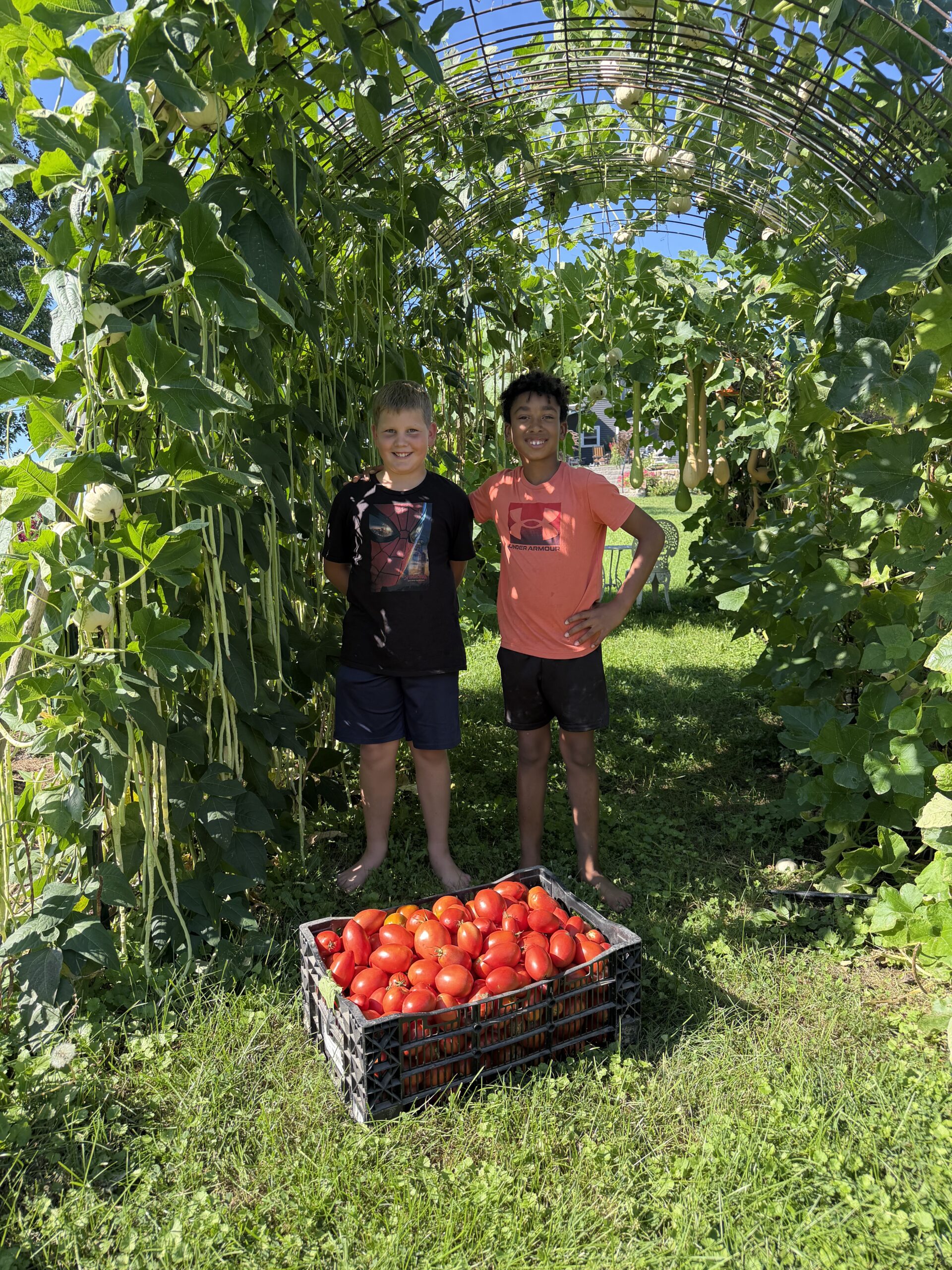
25 lbs. of tomatoes
Hands full of red raspberries for fresh eating
A few bowls full of grapes for fresh eating
Bouquets of zinnias
Bowls full of Jonagold apples.
Celery for cooking needs
Carrots for cooking needs
What We Preserved
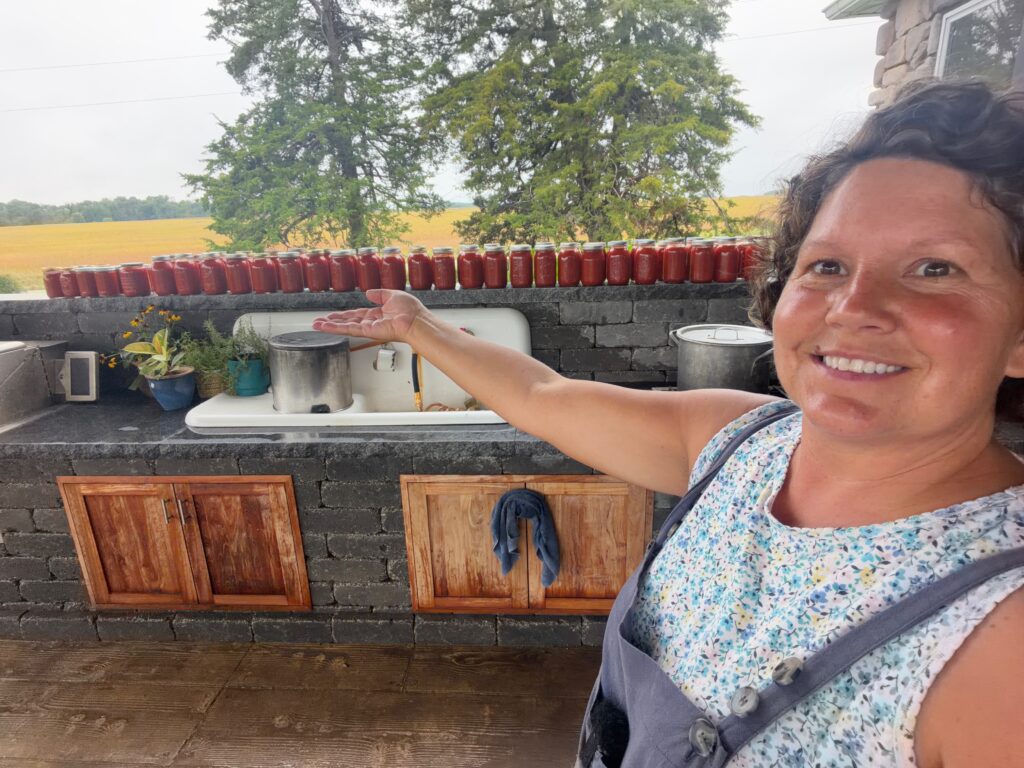
52 quarts of pasta sauce using the 25 lbs. of tomatoes that we harvested, plus all the tomatoes I had stashed in the freezer over that last month.
All the onions and garlic that were curing are now in crates and stored for winter! (some of the garlic will be planted in the garden in late October)
Garden Talk:
The first planting of buckwheat has all fallen from the heavy rain and is about to release its seeds onto the fertile soil of my garden where they will sprout in the spring!
I am a little disappointed in my management of this cover crop. I knew there would be a narrow window of time when I could cut it down because I wanted to let it flower for as long as possible for my bees. I simply didn’t count on inches of rain and 10 days of ‘to wet for garden work.’
True to my nature, I forgot to account for my inexperience with buckwheat when setting my expectations. But I have purposed that instead of viewing this as a failure, I will see it as a natural part of the learning process, one that will help me learn and grow in using cover crops.
Freezer Tomatoes:
I have long since stopped pretending that I love preserving the harvest. My first love is growing things!
In my early years as a mother, I would put tomatoes that were harvested in the height of summer busy season into the freezer as winter canning project and every year those tomatoes stayed right there in the freezer until spring, then I would end up throwing them out during the spring deep clean of the freezers. Because of this bad habit I made a rule for myself that no tomatoes should enter my freezer! All tomatoes should be processed as soon as they were harvested.
But now, the babies have grown up, their emotional needs have become less, allowing me to be more intentional and disciplined with my time. I am happy to report that for the last two years I have put tomatoes into the freezer and successfully canned them well before winter arrived.
One of the things I have discovered and now love about freezing my tomatoes before preserving them is that it makes them idea for making ketchup and BBQ sauce that don’t need any thickeners or long cooking times!
How to freeze and thaw tomatoes for processing into ketchup, BBQ Sauce or pasta sauce:
Harvest tomatoes when completely ripe.
Clean tomatoes, remove cores and any blemishes.
Cut tomatoes in halves or fourths, depending on how big they are.
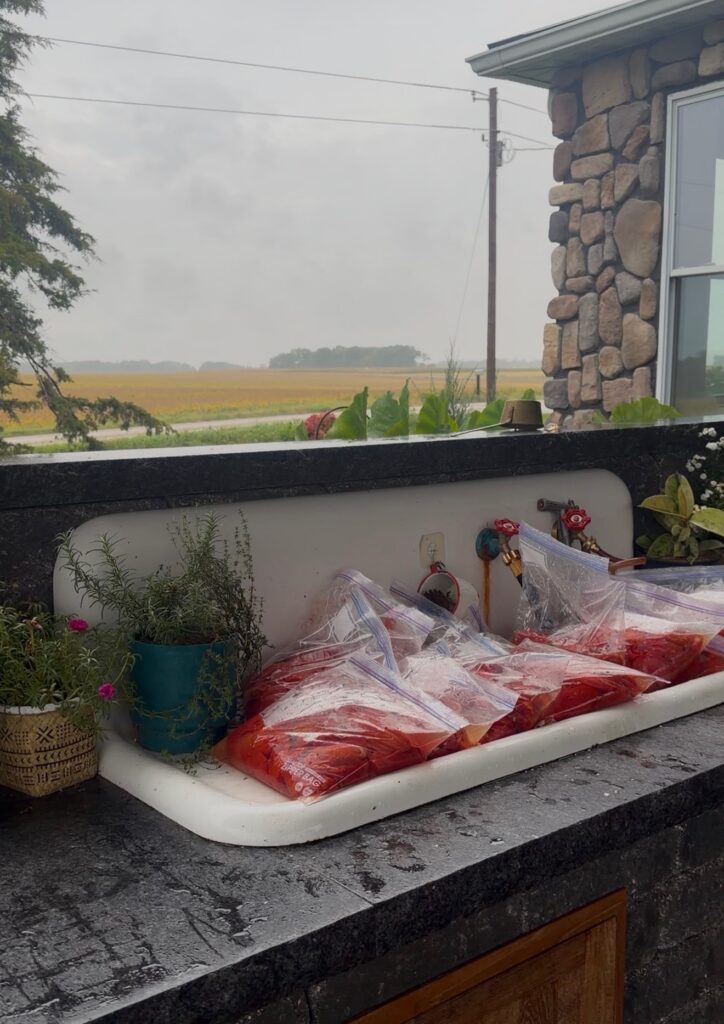
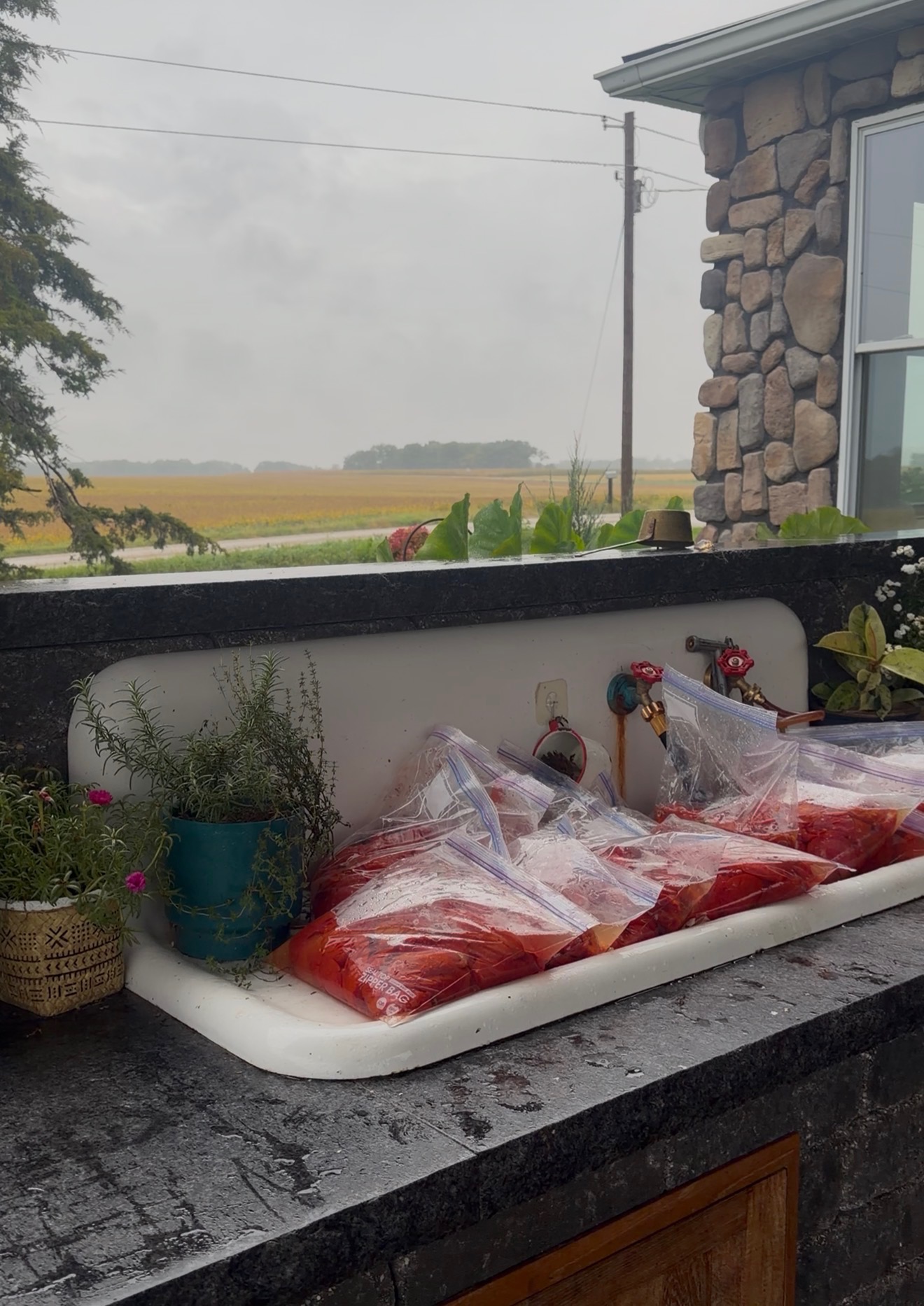
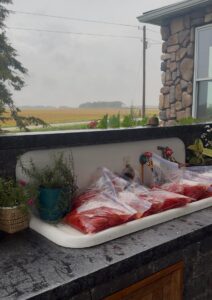
Place tomatoes into 1- or 2-gallon freezer bags and freeze for up to 3 months.
To thaw:
Remove tomatoes from freezer and place in large bowls or tubs to catch drips or leaks from the bags.
Allow to thaw completely. 24-36 hours.
To process thawed tomatoes into ketchup, BBQ sauce, or pasta sauce without thickeners:
Strain all thawed tomatoes through a fine mesh strainer (save this thin watery juice for later)
Put the remaining tomato product through a food mill to remove the skins and seeds. Save the skins and seeds for the chickens or pigs or save them for later. Or through the strained tomatoes through a high-powered blender and blend well until smooth.
You will now have a thick tomato sauce. Proceed with the recipe for ketchup, BBQ Sauce or Pasta Sauce minus the thickeners or tomato pastes.
One of the drawbacks of removing the liquid from thawed tomatoes is that you end up with much less tomato product. If volume is your goal proceed like this:
Instead of straining your liquid from the thawed tomatoes put the liquid and tomatoes through the food mill to remove the skins and seeds. Or
Put the thawed tomatoes, juice and all, through a high-powered blender and blend until smooth.
Measure your tomato product and follow your recipe, cooking or adding thickener until desired consistency is reached.
Ideas for using the juice and skins:
Can (same method as regular tomato juice) or freeze the juice and use in place of veggie stock or add to any soup recipe to boost the flavor and nutrition.
Dehydrate the skins and blend them into a powder. Rehydrate this powder with water to make your own tomato paste.
Thank You for following my Garden Diary! I appreciate you!